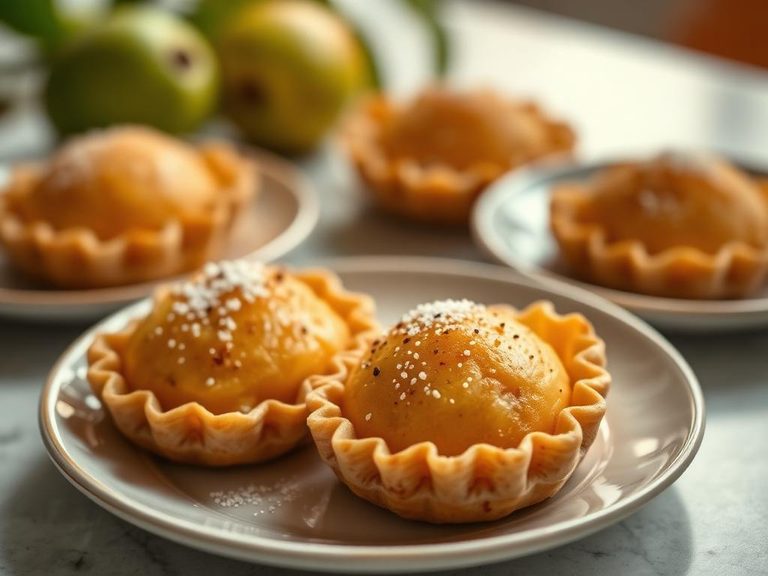
Prune-filled pastries
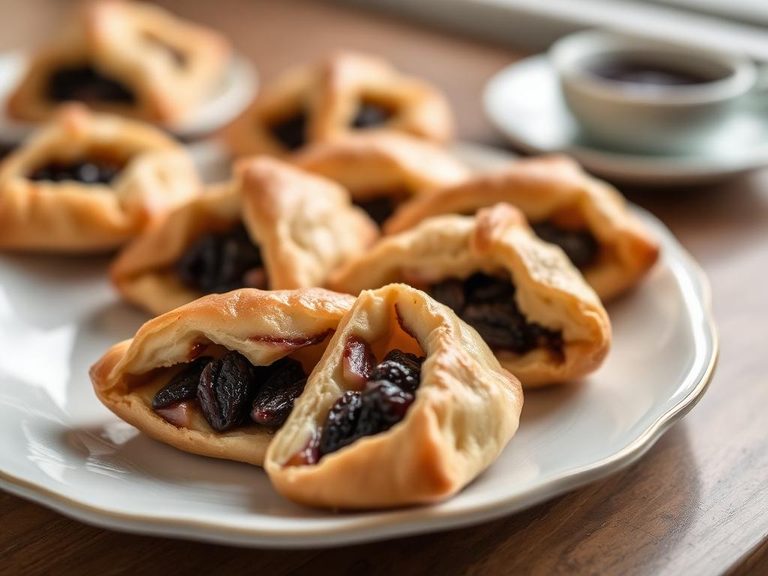
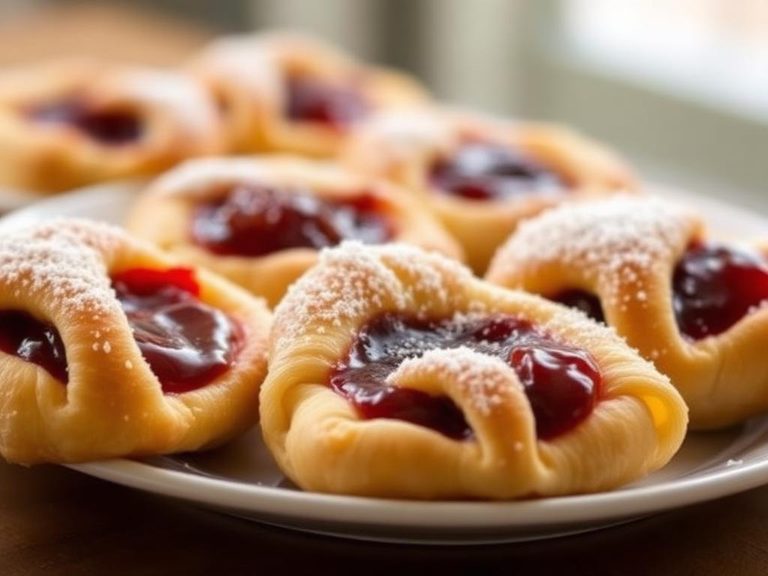
Prune-filled pastries, such as Hamantaschen, are triangular or folded cookies or pastries traditionally filled with a sweet prune paste. They are a staple treat during the Jewish holiday of Purim, symbolizing the defeat of the villain Haman. The dough is typically a simple butter or oil-based cookie, and the filling is made from cooked, sweetened prunes.
🍽️ Nutrition at a glance
These pastries are high in carbohydrates and fat, with the prune filling providing dietary fiber, potassium, and iron. A single, medium-sized pastry contains roughly 150-200 calories, making it an energy-dense, celebratory snack.
Nutrition breakdown
| Calories | 380 kcal |
| Protein | 5 g |
| Carbs | 55 g |
| Fat | 15 g |
| Fiber | 3 g |
| Sugar | 25 g |
| Sodium | 180 mg |
| Iron | 2.5 mg |
| Potassium | 200 mg |
| Calcium | 40 mg |
| Magnesium | 25 mg |
| Vitamin B6 | 0.1 mg |
| Vitamin K | 8 mcg |
| Copper | 0.2 mg |
| Manganese | 0.4 mg |
Per 3 pieces (120 g) · estimated, varies by recipe
💡 What's interesting
The triangular shape of Hamantaschen is said to represent Haman's three-cornered hat. Nutritionally, the prune filling offers a traditional, naturally sweet alternative to processed jams, providing a boost of fiber and antioxidants in a festive package.