

PB&J
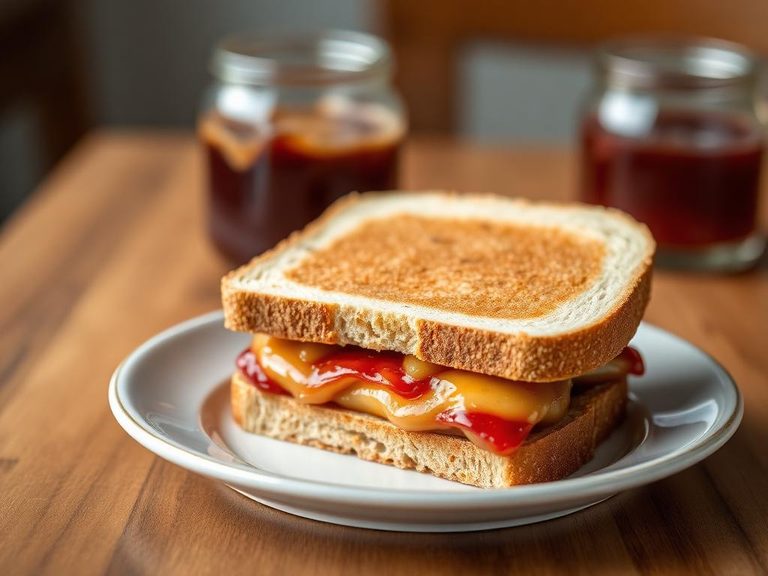
The PB&J is a classic American sandwich made by spreading peanut butter and jelly (typically grape or strawberry jam) between two slices of bread. It is a simple, no-cook staple often associated with childhood lunches and quick meals. The dish originated in the United States in the early 20th century, with its popularity rising after peanut butter became commercially available.
🍽️ Nutrition at a glance
A standard PB&J is moderately high in carbohydrates and fats, with a decent amount of plant-based protein from the peanut butter. It provides key nutrients like niacin, magnesium, and vitamin E, and a typical serving ranges from 350 to 500 calories depending on the bread and portion sizes.
Nutrition breakdown
| Calories | 390 kcal |
| Protein | 14 g |
| Carbs | 42 g |
| Fat | 18 g |
| Fiber | 3 g |
| Sugar | 18 g |
| Sodium | 550 mg |
| Potassium | 250 mg |
| Iron | 2 mg |
| Magnesium | 60 mg |
| Phosphorus | 150 mg |
| Vitamin E | 3 mg |
| Niacin (B3) | 4 mg |
| Folate | 60 µg |
| Manganese | 1 mg |
Per 1 sandwich (approx. 120 g) · estimated, varies by recipe
💡 What's interesting
Culturally, the PB&J is an iconic symbol of American comfort food and simplicity, often featured in movies and literature as a nostalgic reference. Nutritionally, it's interesting because it combines complementary proteins from the bread and peanut butter, making it a more complete protein source than many other plant-based meals.
AI estimate may be inaccurate · Terms