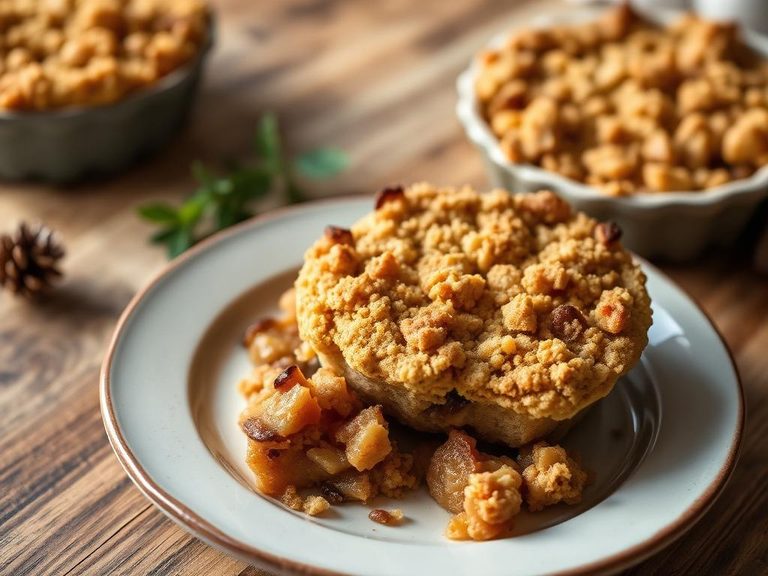
Mince Pie

A Mince Pie is a small, sweet British pastry filled with 'mincemeat'—a spiced mixture of dried fruits, sugar, suet (or butter), and often a splash of brandy or rum. Originating in medieval England, it is a quintessential Christmas treat, traditionally eaten during the festive season from late November to Epiphany (January 6th).
🍽️ Nutrition at a glance
This pastry is high in carbohydrates and fat, primarily from the sugary fruit filling and the buttery shortcrust pastry. A single pie provides a quick energy boost and some iron from the dried fruits, but is an indulgence rather than a nutrient-dense food, with a typical calorie count around 250-300 kcal per pie.
Nutrition breakdown
| Calories | 275 kcal |
| Protein | 2.5 g |
| Carbs | 35 g |
| Fat | 14 g |
| Fiber | 2 g |
| Sugar | 22 g |
| Sodium | 180 mg |
| Iron | 1.8 mg |
| Potassium | 120 mg |
| Vitamin C | 1.5 mg |
| Calcium | 25 mg |
| Magnesium | 15 mg |
| Phosphorus | 40 mg |
| Zinc | 0.4 mg |
| Manganese | 0.3 mg |
Per 1 mince pie (approx. 65 g) · estimated, varies by recipe
💡 What's interesting
Historically, mincemeat actually contained minced meat (like beef or mutton) alongside the fruits and spices, a practice that has largely faded in modern recipes. Nutritionally, the dense mix of dried fruits offers a concentrated source of dietary fiber and antioxidants, though it's often overshadowed by the high sugar content.