

Milkshake or float

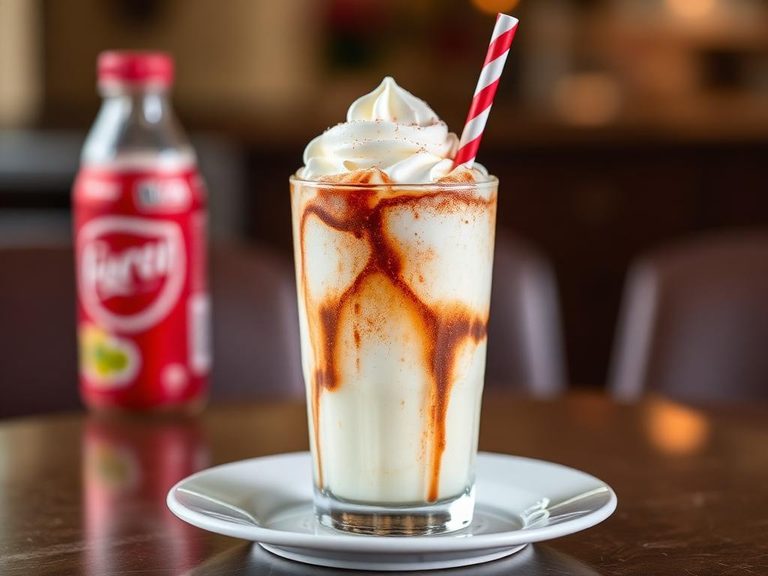
A milkshake is a cold, sweet beverage made by blending milk, ice cream, and flavorings like fruit, chocolate, or vanilla. A float (or ice cream float) is a drink made by combining a carbonated beverage, such as cola or root beer, with scoops of ice cream, creating a frothy, creamy treat. Both are classic American desserts originating from soda fountains in the early 20th century.
🍽️ Nutrition at a glance
These treats are typically high in carbohydrates and fat, with a significant amount of sugar providing quick energy. A standard serving offers a good dose of calcium and some protein from the dairy, but it's a calorie-dense indulgence.
Nutrition breakdown
| Calories | 580 kcal |
| Protein | 12 g |
| Carbs | 80 g |
| Fat | 24 g |
| Fiber | 1 g |
| Sugar | 65 g |
| Sodium | 280 mg |
| Calcium | 350 mg |
| Vitamin D | 2.5 mcg |
| Potassium | 500 mg |
| Phosphorus | 280 mg |
| Vitamin A | 180 mcg |
| Riboflavin (B2) | 0.4 mg |
| Vitamin B12 | 1.2 mcg |
| Magnesium | 40 mg |
Per 1 large milkshake (450 g) · estimated, varies by recipe
💡 What's interesting
The milkshake's evolution from a whiskey-based drink to a family-friendly ice cream staple is a fascinating piece of American culinary history. Nutritionally, the combination of fat and sugar in these treats can be particularly rewarding to the brain's pleasure centers, which explains their enduring popularity as comfort food.
🍽️ Related dishes





AI estimate may be inaccurate · Terms