

Mediterranean Veggie Pita
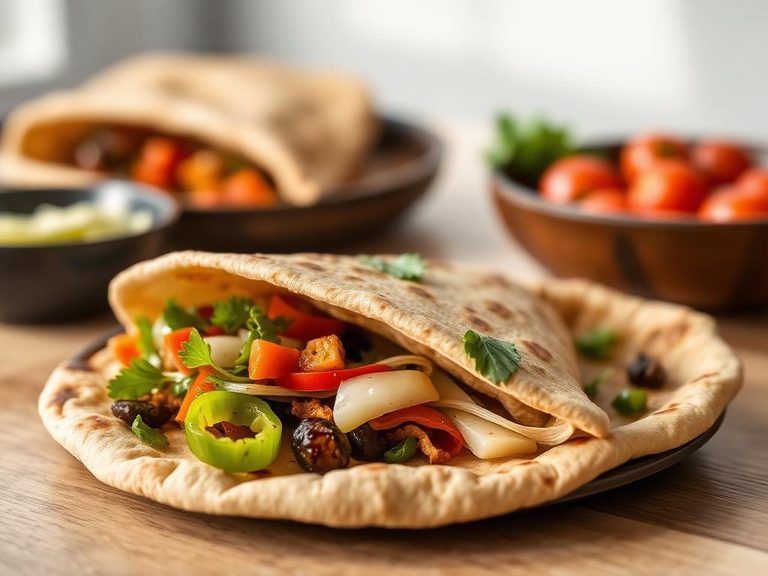
The Mediterranean Veggie Pita is a vibrant, handheld dish featuring a warm pita bread pocket generously stuffed with a colorful mix of fresh vegetables, herbs, and often a tangy sauce. Typical fillings include crisp cucumbers, juicy tomatoes, red onions, leafy greens, and sometimes olives or feta cheese, all dressed with lemon-herb vinaigrette or creamy tzatziki. This popular street food and casual meal is a staple across the Mediterranean region, particularly in Greece, Turkey, and the Levant.
🍽️ Nutrition at a glance
This dish is generally balanced, offering a good source of complex carbohydrates from the pita, healthy fats from olive oil or tahini-based dressings, and plant-based protein from chickpeas or beans if included. It is rich in fiber, vitamins A and C, and antioxidants from the fresh vegetables, with a typical serving ranging from 300 to 500 calories depending on fillings and portion size.
Nutrition breakdown
| Calories | 350 kcal |
| Protein | 12 g |
| Carbs | 45 g |
| Fat | 14 g |
| Fiber | 7 g |
| Sugar | 6 g |
| Sodium | 680 mg |
| Potassium | 420 mg |
| Vitamin C | 25 mg |
| Vitamin A | 180 mcg RAE |
| Calcium | 150 mg |
| Iron | 3.2 mg |
| Folate | 95 mcg |
| Magnesium | 45 mg |
| Vitamin K | 22 mcg |
Per 1 pita pocket (approx. 200 g) · estimated, varies by recipe
💡 What's interesting
Culturally, the pita itself is an ancient flatbread with roots in the Neolithic era, symbolizing communal eating and hospitality across the Mediterranean. Nutritionally, its emphasis on raw vegetables, olive oil, and herbs aligns with the renowned Mediterranean diet, which is celebrated for promoting heart health and longevity.
🍽️ Related dishes



AI estimate may be inaccurate · Terms