

Malaysian Beef Rendang
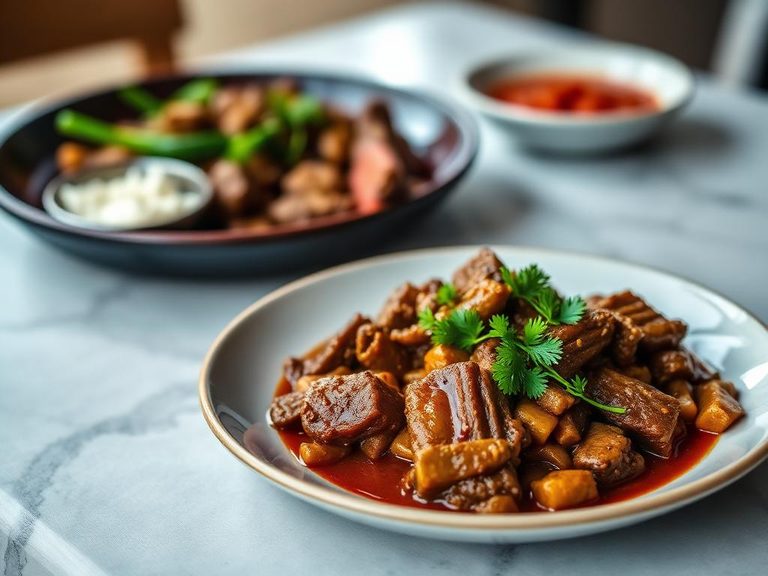
Malaysian Beef Rendang is a rich, aromatic dry curry originating from the Minangkabau people of West Sumatra, Indonesia, and is widely beloved across Malaysia, Indonesia, and Singapore. It features slow-cooked beef simmered in coconut milk and a complex paste of lemongrass, galangal, turmeric, ginger, and chilies, often with toasted coconut for depth. The dish is typically served during festive occasions like Eid and is a cornerstone of Malay and Indonesian culinary heritage.
🍳 View the full Malaysian Beef Rendang recipe →
🍽️ Nutrition at a glance
Beef Rendang is high in protein and fat due to the beef and coconut milk, with minimal carbohydrates unless served with rice. It provides key nutrients like iron, zinc, and B vitamins from the beef, along with healthy fats from coconut, and a typical serving (about 1 cup) ranges from 400 to 600 calories.
Nutrition breakdown
| Calories | 480 kcal |
| Protein | 35 g |
| Carbs | 12 g |
| Fat | 34 g |
| Fiber | 3 g |
| Sugar | 4 g |
| Sodium | 680 mg |
| Iron | 4.5 mg |
| Zinc | 8.2 mg |
| Potassium | 520 mg |
| Phosphorus | 290 mg |
| Vitamin B12 | 2.8 mcg |
| Niacin (B3) | 9.1 mg |
| Vitamin B6 | 0.6 mg |
| Magnesium | 45 mg |
Per 1 cup (240 g) · estimated, varies by recipe
💡 What's interesting
Culturally, Rendang is more than a dish—it's a symbol of patience and communal harmony, as its slow cooking process (often hours) reflects traditional values. Nutritionally, the use of coconut milk and spices like turmeric and galangal adds anti-inflammatory and antioxidant properties, making it a flavorful yet functional food.
🍽️ Related dishes

AI estimate may be inaccurate · Terms