

Korean Musanghwa
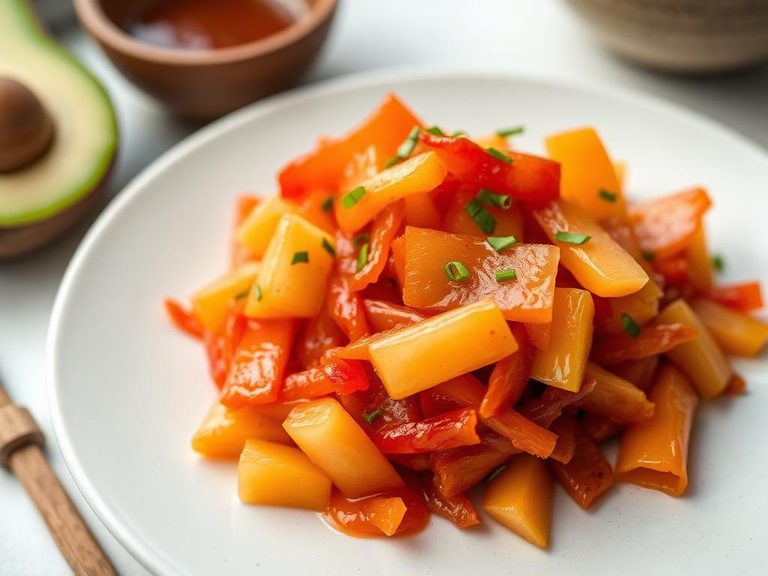
Korean Musanghwa (무쌍화) is a unique type of kimchi made by fermenting whole or large chunks of Asian pear (Bae, 배) with a spicy, savory paste. The paste typically includes gochugaru (Korean chili flakes), garlic, ginger, fish sauce or salted shrimp, and sometimes a touch of sugar or glutinous rice paste for fermentation. It originates from the Gyeongsang provinces of South Korea, where it's cherished as a seasonal delicacy.
🍽️ Nutrition at a glance
Musanghwa is relatively low in calories, fat, and protein, with its primary nutrient coming from the natural sugars and dietary fiber of the Asian pear. It provides a good source of vitamin C, potassium, and beneficial probiotics from fermentation, with a typical serving containing around 30-50 calories.
Nutrition breakdown
| Calories | 45 kcal |
| Protein | 1.2 g |
| Carbs | 10 g |
| Fat | 0.1 g |
| Fiber | 2.5 g |
| Sugar | 7 g |
| Sodium | 680 mg |
| Vitamin C | 12 mg |
| Vitamin K | 8 mcg |
| Potassium | 180 mg |
| Manganese | 0.3 mg |
| Vitamin B6 | 0.08 mg |
| Folate | 15 mcg |
| Copper | 0.1 mg |
| Iron | 0.5 mg |
Per 1 cup (150 g) · estimated, varies by recipe
💡 What's interesting
What makes Musanghwa unique is its use of a whole, crisp fruit as the base for kimchi, offering a refreshing, sweet-and-spicy contrast to the more common cabbage varieties. Nutritionally, it's interesting because the fermentation process not only preserves the pear's nutrients but also creates gut-friendly probiotics, making it a crunchy, flavorful way to support digestive health.
🍽️ Related dishes
AI estimate may be inaccurate · Terms