

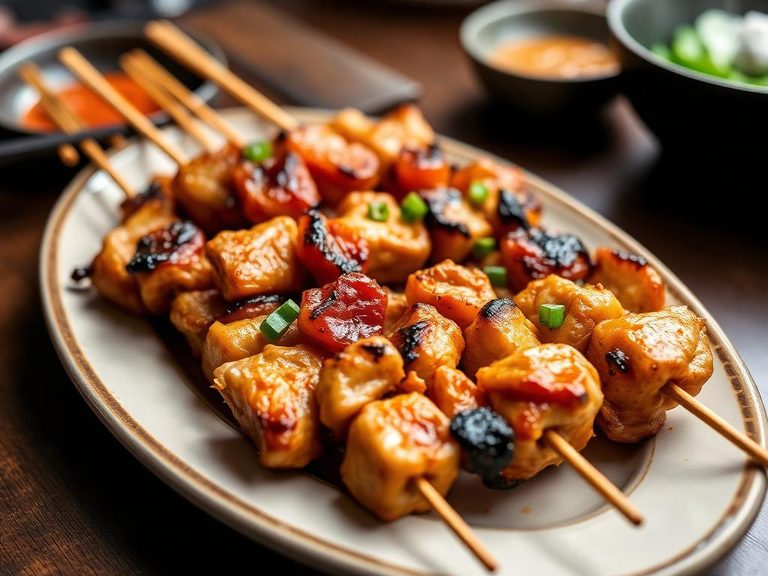
Japanese Hormone Yaki
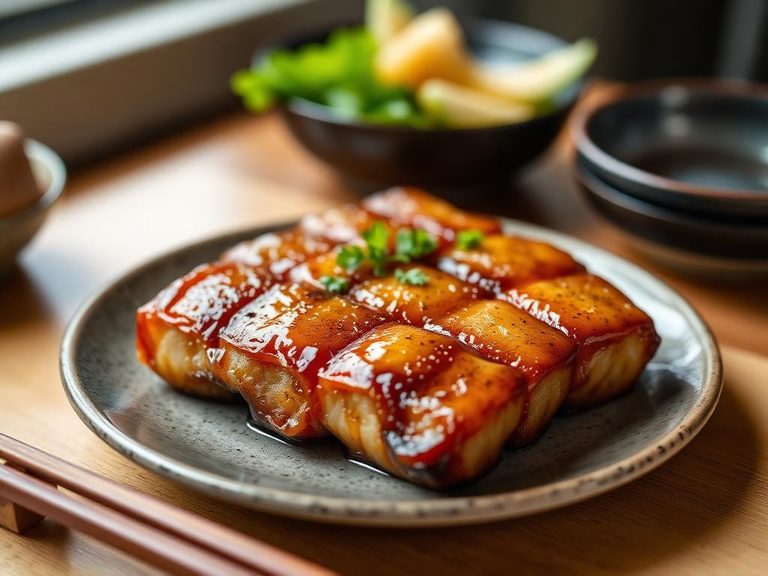
Japanese Hormone Yaki is a popular izakaya dish featuring grilled offal (typically pork or beef intestines, heart, or liver) marinated in a sweet and savory soy-based sauce. Originating from post-war Japan as a resourceful way to use less desirable cuts, it's now a beloved, flavorful staple of Japanese pub culture.
🍽️ Nutrition at a glance
This dish is high in protein and fat, with minimal carbohydrates. It is a significant source of iron, vitamin B12, and zinc, with a rough calorie range of 250-350 kcal per typical serving.
Nutrition breakdown
| Calories | 300 kcal |
| Protein | 22 g |
| Carbs | 8 g |
| Fat | 20 g |
| Fiber | 0.5 g |
| Sugar | 6 g |
| Sodium | 580 mg |
| Vitamin B12 | 8.5 mcg |
| Iron | 4.2 mg |
| Zinc | 5.8 mg |
| Selenium | 32 mcg |
| Phosphorus | 280 mg |
| Niacin (B3) | 8.5 mg |
| Copper | 0.6 mg |
| Riboflavin (B2) | 0.9 mg |
Per 1 serving (150 g) · estimated, varies by recipe
💡 What's interesting
Culturally, Hormone Yaki represents the Japanese principle of 'mottainai' (avoiding waste) by transforming offal into a delicacy. Nutritionally, it's a dense source of nutrients often lacking in modern diets, like heme iron and B vitamins.
🍽️ Related dishes
AI estimate may be inaccurate · Terms