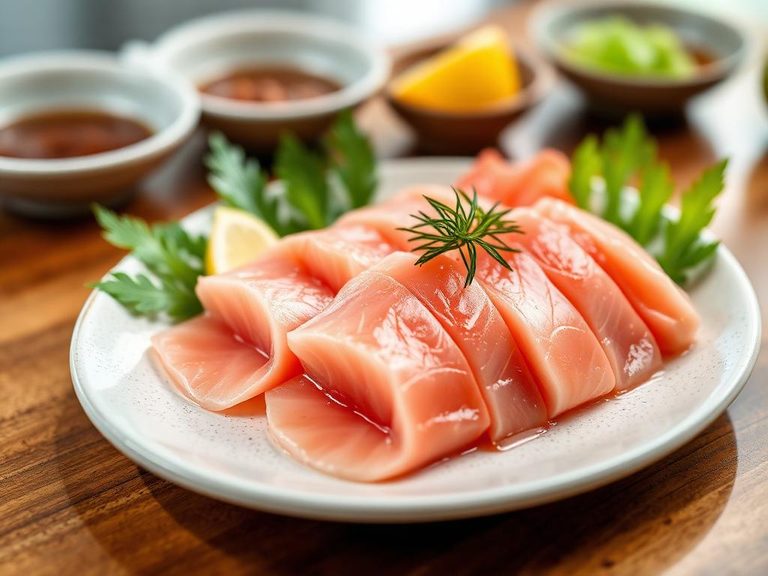
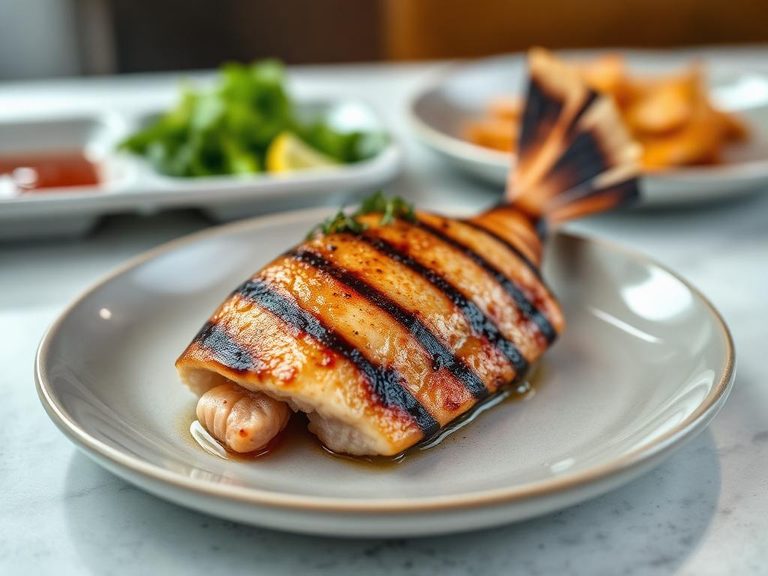
Hamachi Kama
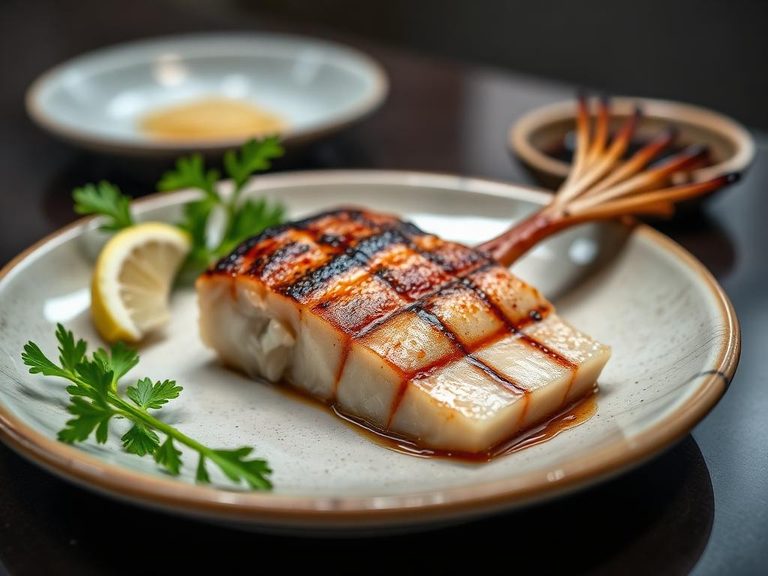
Hamachi Kama is a prized Japanese dish consisting of the grilled collar (kama) of yellowtail fish (hamachi). It is typically seasoned simply with salt and grilled until the skin is crispy and the flesh is tender, often served with a wedge of lemon. This dish is a staple in Japanese izakayas and sushi restaurants, celebrated for its rich, succulent flavor.
🍽️ Nutrition at a glance
Hamachi Kama is high in protein and healthy fats, particularly omega-3 fatty acids, while being very low in carbohydrates. A typical serving (around 150-200 grams) provides approximately 300-400 calories, along with significant amounts of vitamin D, selenium, and B vitamins.
Nutrition breakdown
| Calories | 450 kcal |
| Protein | 35 g |
| Carbs | 0 g |
| Fat | 34 g |
| Fiber | 0 g |
| Sugar | 0 g |
| Sodium | 120 mg |
| Vitamin D | 12 mcg |
| Vitamin B12 | 8.5 mcg |
| Niacin (B3) | 10 mg |
| Selenium | 65 mcg |
| Phosphorus | 300 mg |
| Omega-3 (EPA+DHA) | 2.5 g |
| Potassium | 450 mg |
| Magnesium | 40 mg |
Per 1 collar (approximately 200 g) · estimated, varies by recipe
💡 What's interesting
Culturally, hamachi kama is considered a delicacy in Japan, often enjoyed as a savory accompaniment to drinks. Nutritionally, the collar is one of the fattiest and most flavorful parts of the fish, making it a nutrient-dense choice that supports heart and brain health.