Kamaboko
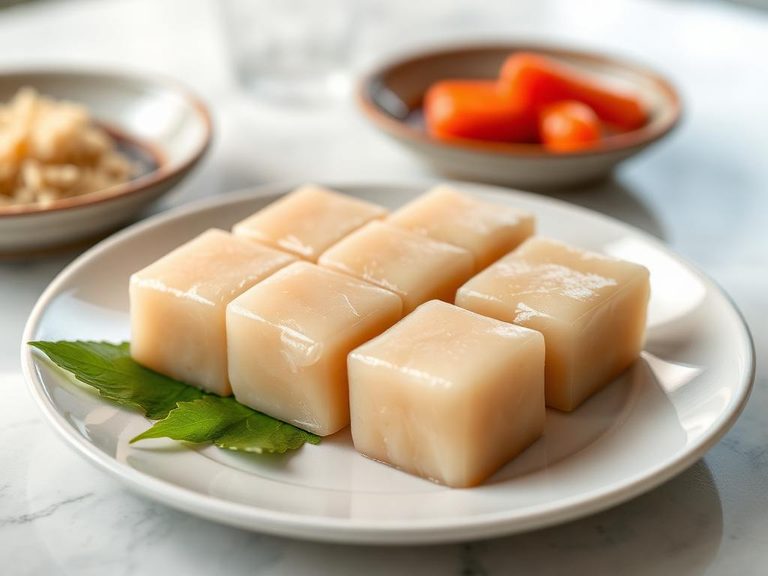
Kamaboko with lotus root is a type of Japanese fish cake (surimi) that incorporates crunchy slices of lotus root into the seasoned fish paste. It is a popular processed seafood product, often served in soups, hot pots, or as a side dish in Japanese cuisine. The dish originates from Japan and is a common sight in bento boxes and New Year's celebrations.
🍽️ Nutrition at a glance
This dish is primarily a source of lean protein from the fish paste, with a relatively low fat and moderate carbohydrate content from the lotus root and any added starches. A typical serving provides about 50-70 calories, along with minerals like phosphorus and selenium from the fish.
Nutrition breakdown
| Calories | 75 kcal |
| Protein | 12 g |
| Carbs | 2 g |
| Fat | 2 g |
| Fiber | 0.5 g |
| Sugar | 0.5 g |
| Sodium | 380 mg |
| Phosphorus | 150 mg |
| Selenium | 20 mcg |
| Vitamin B12 | 1.5 mcg |
| Niacin (B3) | 2 mg |
| Potassium | 180 mg |
| Magnesium | 20 mg |
| Zinc | 1 mg |
| Iron | 0.8 mg |
Per 1 piece (approx. 80 g) · estimated, varies by recipe
💡 What's interesting
Culturally, kamaboko is a staple of Japanese New Year's (Osechi) cuisine, where its red and white colors symbolize celebration and good fortune. Nutritionally, the addition of lotus root provides dietary fiber and a distinctive crunchy texture that contrasts with the soft, springy fish cake.