

Gänsebraten
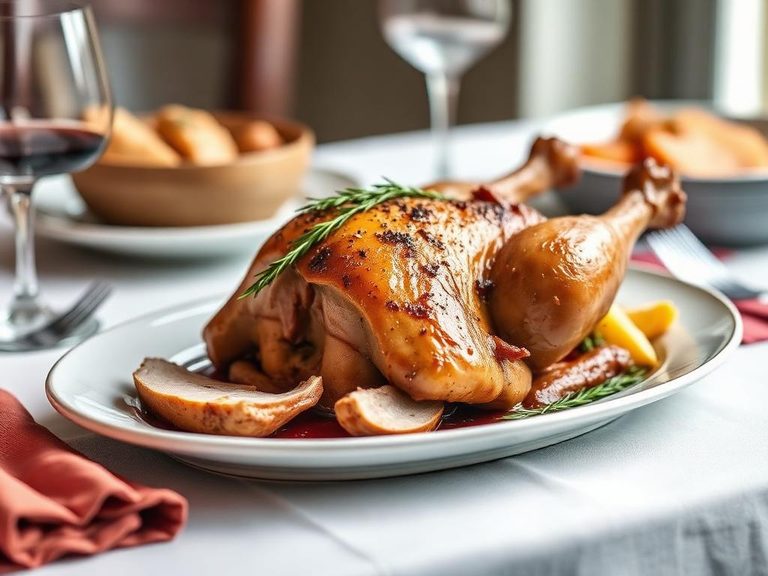
Gänsebraten is a traditional German roast goose dish, typically prepared with a whole goose seasoned with salt, pepper, and caraway seeds, then roasted until the skin is crispy and the meat is tender. It is often served with rich gravy, red cabbage (Rotkohl), and dumplings or potatoes, making it a hearty centerpiece for festive meals, especially during Christmas or Michaelmas (September 29th).
🍽️ Nutrition at a glance
This dish is high in protein and fat, providing essential nutrients like iron, zinc, and B vitamins, particularly B12, which supports energy metabolism. A typical serving of roast goose with sides can range from 600 to 900 calories, depending on portion size and preparation.
Nutrition breakdown
| Calories | 720 kcal |
| Protein | 48 g |
| Carbs | 12 g |
| Fat | 56 g |
| Fiber | 1 g |
| Sugar | 3 g |
| Sodium | 850 mg |
| Iron | 6.5 mg |
| Zinc | 8.2 mg |
| Phosphorus | 380 mg |
| Potassium | 420 mg |
| Vitamin B6 | 0.8 mg |
| Vitamin B12 | 3.5 mcg |
| Niacin (B3) | 12 mg |
| Selenium | 35 mcg |
Per 1 serving (300 g) with skin and some fat, including meat and gravy · estimated, varies by recipe
💡 What's interesting
Culturally, Gänsebraten is deeply tied to German autumn and winter celebrations, symbolizing abundance and tradition, while nutritionally, the goose meat offers a richer flavor and higher fat content compared to poultry like chicken, which helps keep the meat moist during slow roasting.
AI estimate may be inaccurate · Terms