Egyptian Fenugreek Rice
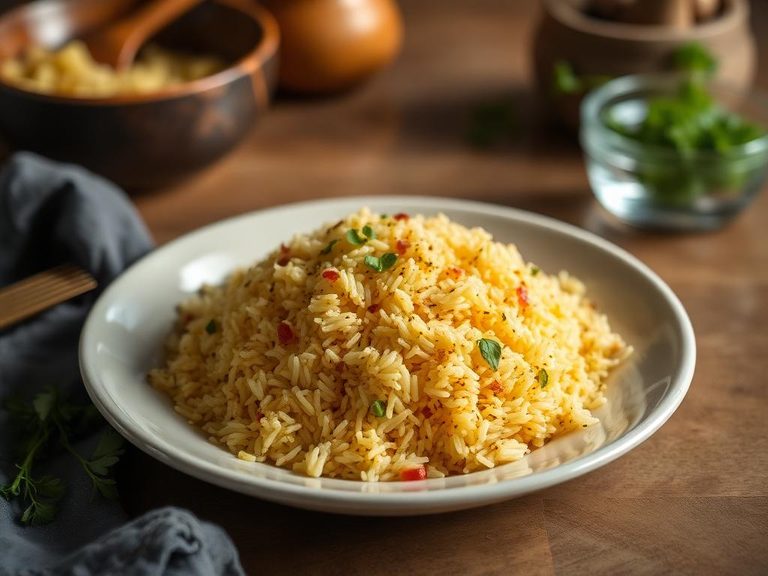
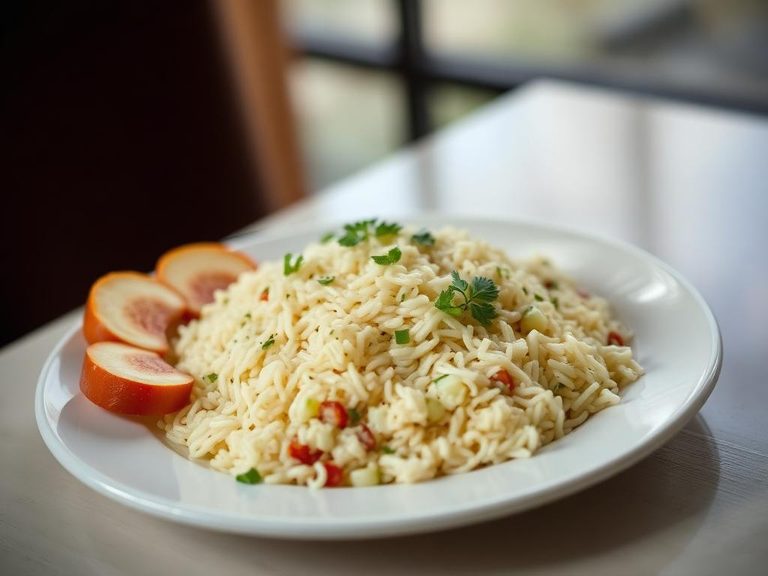
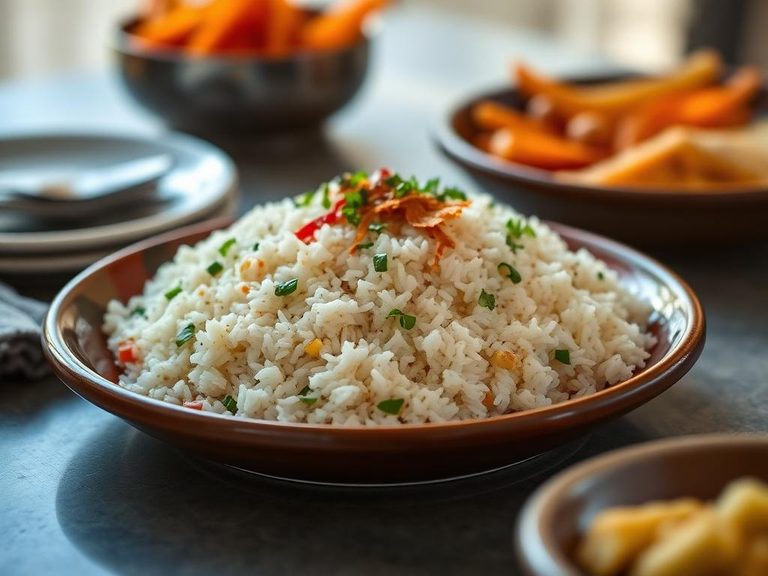
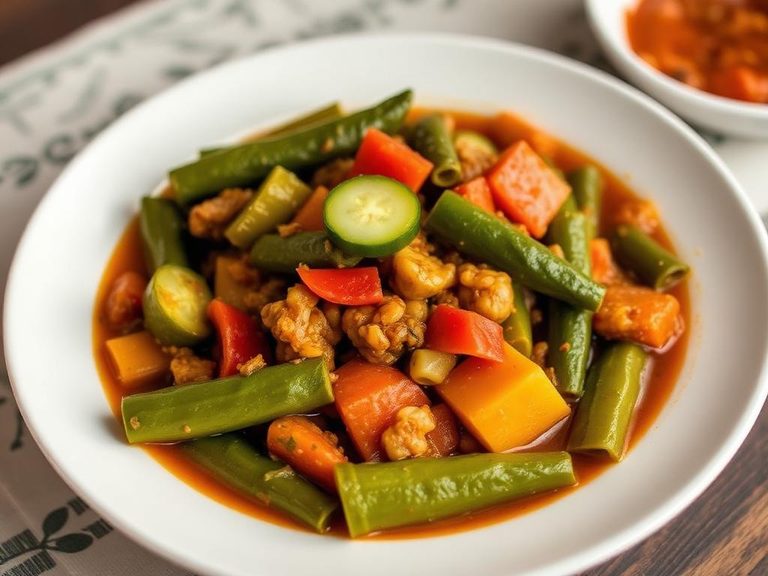
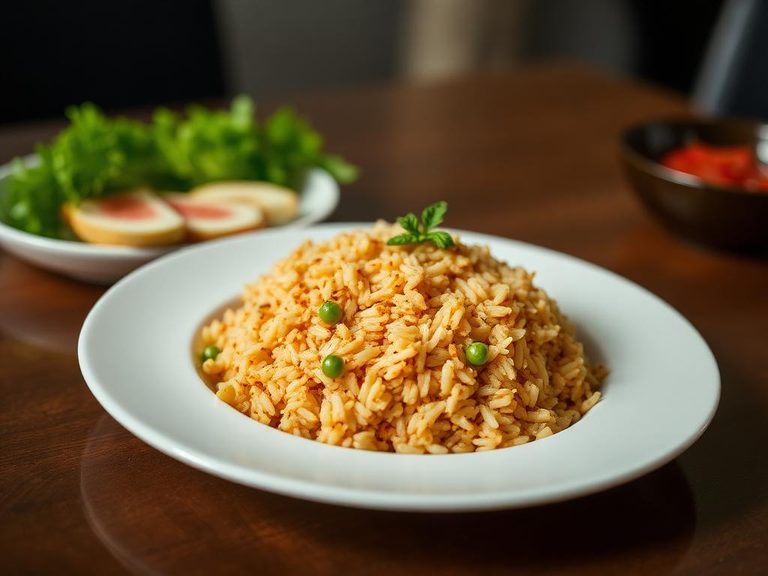
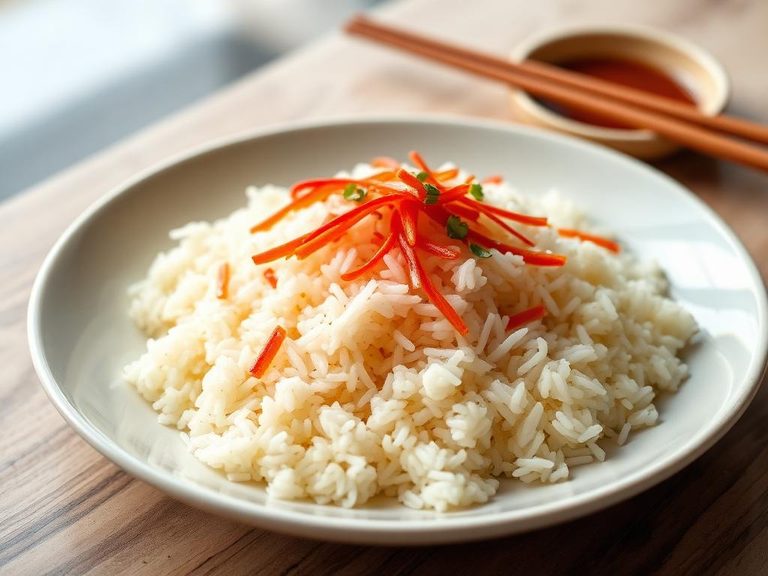
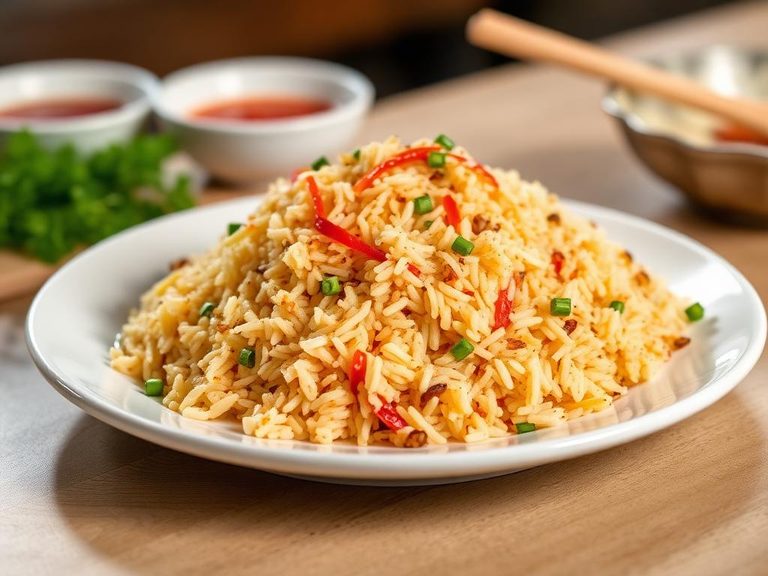
Egyptian Fenugreek Rice, known locally as 'Roz bil Hulba', is a fragrant and savory rice dish where long-grain rice is cooked with fenugreek leaves, onions, and a blend of warm spices. It is a comforting staple in Egyptian cuisine, often served as a side dish or a main course with meat or vegetables. The dish is celebrated for its distinctive, slightly bitter, and earthy aroma derived from the fenugreek.
🍽️ Nutrition at a glance
This dish is primarily a carbohydrate-rich meal from the rice, with a moderate amount of fiber from the fenugreek and onions. A typical serving provides a good source of energy and essential minerals like iron and magnesium, with a rough calorie estimate of 250-300 kcal per cup.
Nutrition breakdown
| Calories | 275 kcal |
| Protein | 5 g |
| Carbs | 52 g |
| Fat | 5 g |
| Fiber | 4 g |
| Sugar | 3 g |
| Sodium | 380 mg |
| Iron | 2.8 mg |
| Magnesium | 45 mg |
| Potassium | 180 mg |
| Phosphorus | 95 mg |
| Manganese | 0.9 mg |
| Folate | 35 mcg |
| Vitamin B6 | 0.15 mg |
| Copper | 0.15 mg |
Per 1 cup (200 g) · estimated, varies by recipe
💡 What's interesting
Culturally, fenugreek is a cornerstone herb in Egyptian cooking, believed to have warming properties and often used in postpartum meals. Nutritionally, fenugreek leaves are a potent source of antioxidants and are traditionally valued for their potential to support digestive health.