

Egg-free fried rice
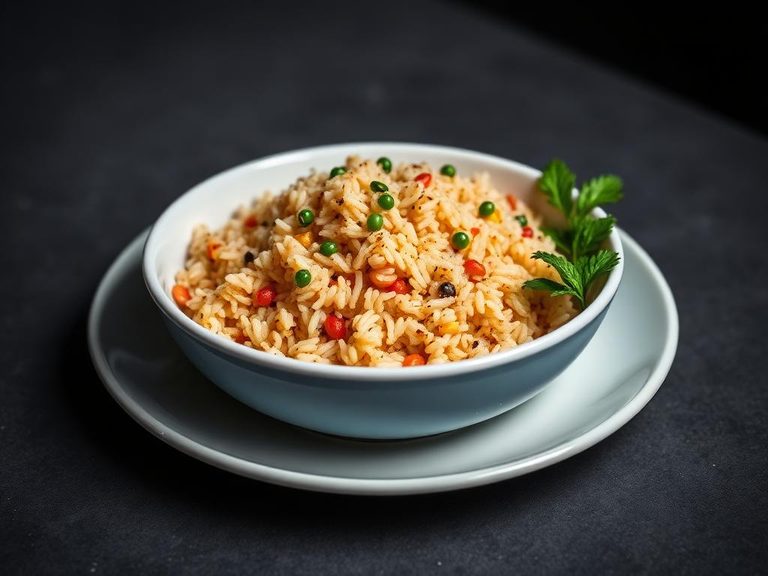
Egg-free fried rice is a popular variation of the classic Chinese stir-fried rice dish, prepared without eggs. It typically features cooked rice stir-fried with a mix of vegetables like peas, carrots, and corn, along with aromatics such as garlic and ginger, and is seasoned with soy sauce or other savory sauces. This dish is a staple in many Asian cuisines and is often enjoyed as a quick, satisfying meal.
🍳 View the full Egg-free fried rice recipe →
🍽️ Nutrition at a glance
Egg-free fried rice is primarily a high-carbohydrate dish from the rice, with moderate fat from the cooking oil and minimal protein unless added with ingredients like tofu or edamame. It provides essential nutrients like B vitamins from the rice, fiber from the vegetables, and small amounts of iron and vitamin C. A typical serving contains roughly 300-400 calories, depending on portion size and oil usage.
Nutrition breakdown
| Calories | 320 kcal |
| Protein | 6.5 g |
| Carbs | 52 g |
| Fat | 10 g |
| Fiber | 3.5 g |
| Sugar | 4 g |
| Sodium | 680 mg |
| Potassium | 220 mg |
| Iron | 3.2 mg |
| Vitamin B1 (Thiamin) | 0.3 mg |
| Vitamin B3 (Niacin) | 4.5 mg |
| Folate | 110 mcg |
| Manganese | 1.8 mg |
| Selenium | 18 mcg |
| Vitamin C | 8 mg |
Per 1 cup (240 g) · estimated, varies by recipe
💡 What's interesting
Culturally, egg-free fried rice is a common adaptation in vegan or vegetarian diets and is often served during festivals or as a way to use leftover rice, reflecting the Chinese principle of minimizing food waste. Nutritionally, it can be a balanced one-pot meal when loaded with vegetables, offering a quick source of energy and customizable nutrients.
🍽️ Related dishes




AI estimate may be inaccurate · Terms