Diet soda and flavored water
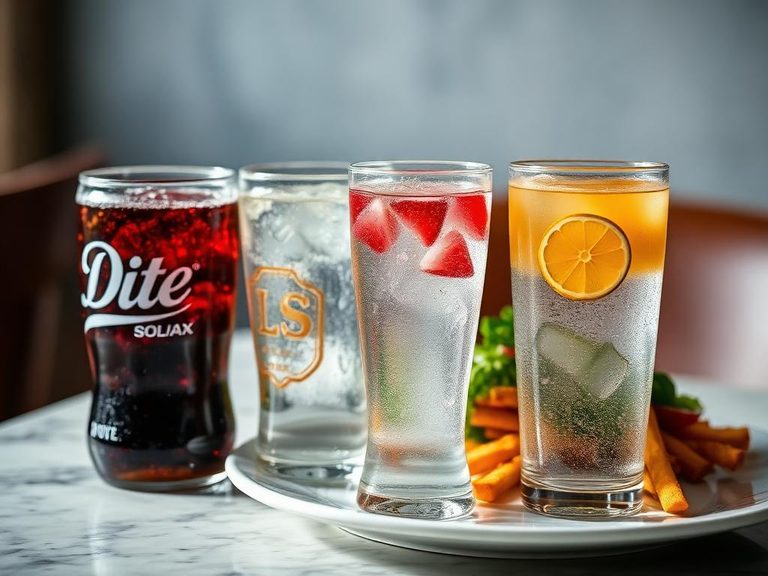
Diet soda and flavored water are non-alcoholic, calorie-free or very low-calorie beverages designed for hydration and enjoyment. They are typically carbonated or still water-based drinks infused with artificial or natural sweeteners, flavorings, and sometimes vitamins or minerals. These drinks are globally popular, originating from the modern beverage industry's response to demand for healthier, sugar-free alternatives to traditional sodas.
🍽️ Nutrition at a glance
These beverages are essentially carbohydrate-free, fat-free, and protein-free, providing negligible calories (usually 0-5 kcal per serving). Their key nutritional contribution, if any, comes from added vitamins (like B vitamins) or minerals (like potassium) in fortified versions, but they offer no significant macronutrients.
Nutrition breakdown
| Calories | 0 kcal |
| Protein | 0 g |
| Carbs | 0 g |
| Fat | 0 g |
| Fiber | 0 g |
| Sugar | 0 g |
| Sodium | 40 mg |
| Potassium | 40 mg |
| Vitamin B6 | 0.2 mg |
| Niacin (B3) | 2 mg |
| Vitamin B12 | 0.6 mcg |
| Pantothenic Acid (B5) | 1 mg |
| Magnesium | 10 mg |
| Zinc | 0.2 mg |
Per 1 can (355 ml) · estimated, varies by recipe
💡 What's interesting
Culturally, diet sodas and flavored waters represent a significant shift in global beverage consumption towards perceived 'healthier' choices, often marketed as aids for weight management or sugar reduction. Nutritionally, their uniqueness lies in providing flavor and refreshment without the caloric load of sugar, though debates continue about the long-term effects of artificial sweeteners.