

Dhal
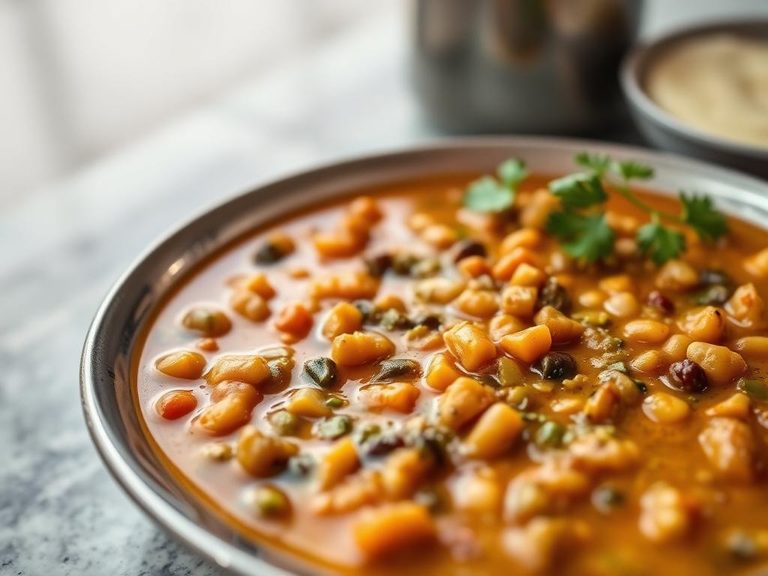
Dhal, also spelled dal or daal, is a comforting and aromatic dish originating from the Indian subcontinent, made by simmering split pulses like lentils, peas, or chickpeas until soft. It is typically seasoned with a blend of spices such as turmeric, cumin, and coriander, and often finished with a tempering of ghee, mustard seeds, and curry leaves.
🍽️ Nutrition at a glance
Dhal is a nutritionally balanced dish, being a good source of plant-based protein and complex carbohydrates, while generally low in fat. It is rich in dietary fiber, iron, folate, and B vitamins, with a typical serving containing around 200-300 calories depending on the preparation.
Nutrition breakdown
| Calories | 230 kcal |
| Protein | 13 g |
| Carbs | 38 g |
| Fat | 4 g |
| Fiber | 15 g |
| Sugar | 4 g |
| Sodium | 480 mg |
| Potassium | 550 mg |
| Iron | 5.5 mg |
| Folate | 250 mcg |
| Magnesium | 70 mg |
| Phosphorus | 200 mg |
| Zinc | 2.5 mg |
| Thiamin (B1) | 0.3 mg |
| Vitamin B6 | 0.3 mg |
Per 1 cup (240 g) · estimated, varies by recipe
💡 What's interesting
Culturally, dhal is a staple food across South Asia, often served daily with rice or flatbreads, and its preparation varies widely by region, family tradition, and even the season. Nutritionally, when paired with grains like rice, it forms a complete protein, making it a cornerstone of vegetarian diets for centuries.
🍽️ Related dishes
AI estimate may be inaccurate · Terms