

Creamy sauces
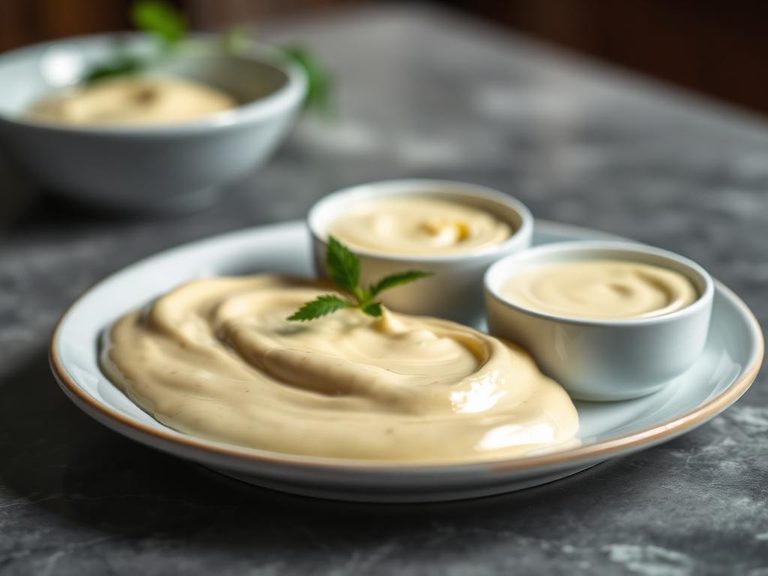
Creamy sauces are rich, smooth culinary preparations typically made from a base of dairy (like cream, milk, or cheese) or a roux (flour and fat), often enhanced with butter, eggs, or pureed ingredients. They originate from French cuisine, forming the foundation of classic 'mother sauces' like Béchamel and Velouté, and are now a global staple in dishes from pasta to casseroles. Their versatility allows them to be flavored with herbs, spices, meats, or vegetables, creating countless variations.
🍽️ Nutrition at a glance
Creamy sauces are generally high in fat and calories, with moderate protein and minimal carbs unless thickened with flour or loaded with starchy ingredients. They provide essential nutrients like calcium, vitamin A, and phosphorus from dairy, but a typical serving can range from 150 to 300 calories, depending on richness and portion size.
Nutrition breakdown
| Calories | 200 kcal |
| Protein | 4 g |
| Carbs | 8 g |
| Fat | 18 g |
| Fiber | 0 g |
| Sugar | 2 g |
| Sodium | 400 mg |
| Calcium | 150 mg |
| Vitamin A | 180 mcg |
| Phosphorus | 120 mg |
| Vitamin D | 1.5 mcg |
| Potassium | 110 mg |
| Vitamin B12 | 0.3 mcg |
| Riboflavin (B2) | 0.1 mg |
| Selenium | 3 mcg |
Per 1/2 cup (120 g) · estimated, varies by recipe
💡 What's interesting
Culturally, creamy sauces are a hallmark of French culinary technique, with the five 'mother sauces' serving as building blocks for thousands of derivatives worldwide. Nutritionally, while often indulgent, they can be a source of fat-soluble vitamins and, when made with whole ingredients, offer a satisfying blend of macros that enhance the palatability and nutrient absorption of accompanying foods.
🍽️ Related dishes

AI estimate may be inaccurate · Terms