

Brotzeit
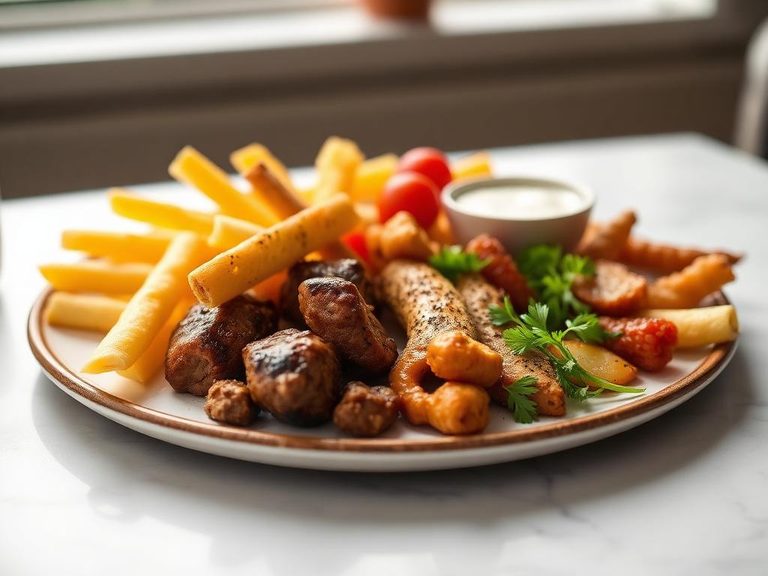
Brotzeit, meaning 'bread time' in German, is a traditional Bavarian snack platter that serves as a hearty, casual meal or appetizer. It typically features an assortment of cured meats, cheeses, pretzels or bread, pickles, and spreads like mustard. Originating from the beer gardens and taverns of southern Germany, it's a cornerstone of Alpine culinary culture.
🍽️ Nutrition at a glance
This platter is generally high in protein and fat from the meats and cheeses, with significant carbohydrates from the bread or pretzels. It provides a good source of B vitamins, iron, and calcium, with a rough calorie range of 600-900 kcal per typical serving depending on the specific selections.
Nutrition breakdown
| Calories | 750 kcal |
| Protein | 35 g |
| Carbs | 45 g |
| Fat | 48 g |
| Fiber | 4 g |
| Sugar | 5 g |
| Sodium | 1800 mg |
| Vitamin B12 | 3.5 µg |
| Iron | 4.5 mg |
| Calcium | 350 mg |
| Zinc | 5 mg |
| Niacin (B3) | 10 mg |
| Phosphorus | 400 mg |
| Selenium | 30 µg |
| Potassium | 450 mg |
Per 1 typical platter (approx. 450 g) · estimated, varies by recipe
💡 What's interesting
Culturally, Brotzeit is synonymous with Gemütlichkeit—a feeling of warmth, friendliness, and good cheer—often enjoyed alongside a Mass (liter) of beer. Nutritionally, it's a balanced, energy-dense meal designed to sustain体力, reflecting its historical role for farmers and laborers.
AI estimate may be inaccurate · Terms