

Blancmange
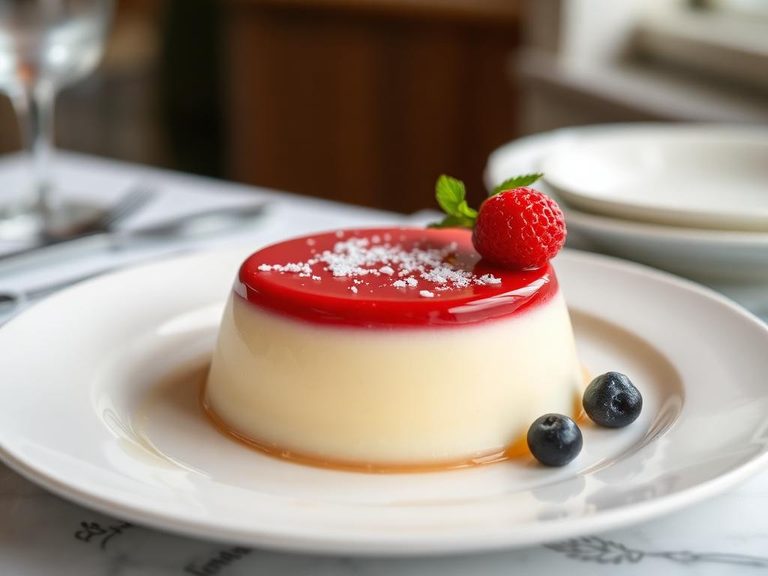
Blancmange is a classic European dessert with a smooth, pudding-like texture, traditionally made from milk or cream thickened with gelatin or cornstarch, sweetened with sugar, and often flavored with vanilla or almond. Its name comes from the French 'blanc manger,' meaning 'white food,' and it has evolved into various forms across different cultures, from a savory medieval dish to the sweet, molded dessert we know today.
🍳 View the full Blancmange recipe →
🍽️ Nutrition at a glance
Typically high in carbohydrates from sugar and sometimes added thickeners, with moderate fat from milk or cream, and low in protein. A standard serving can range from 150 to 300 calories, depending on the recipe, and provides some calcium and vitamin D from dairy ingredients.
Nutrition breakdown
| Calories | 180 kcal |
| Protein | 3.5 g |
| Carbs | 28 g |
| Fat | 6 g |
| Fiber | 0 g |
| Sugar | 22 g |
| Sodium | 120 mg |
| Calcium | 120 mg |
| Phosphorus | 95 mg |
| Potassium | 180 mg |
| Vitamin A | 60 mcg RAE |
| Vitamin D | 1.2 mcg |
| Riboflavin (B2) | 0.15 mg |
| Vitamin B12 | 0.3 mcg |
| Magnesium | 18 mg |
Per 1 cup (240 g) · estimated, varies by recipe
💡 What's interesting
Historically, blancmange was a medicinal food in medieval Europe, believed to be gentle on the stomach, and its transformation from a savory chicken-based dish to a sweet dessert showcases how culinary traditions adapt over centuries. In some Nordic countries, it's a beloved Christmas treat often served with fruit compote, highlighting its cultural versatility.
AI estimate may be inaccurate · Terms