

Base for a trifle
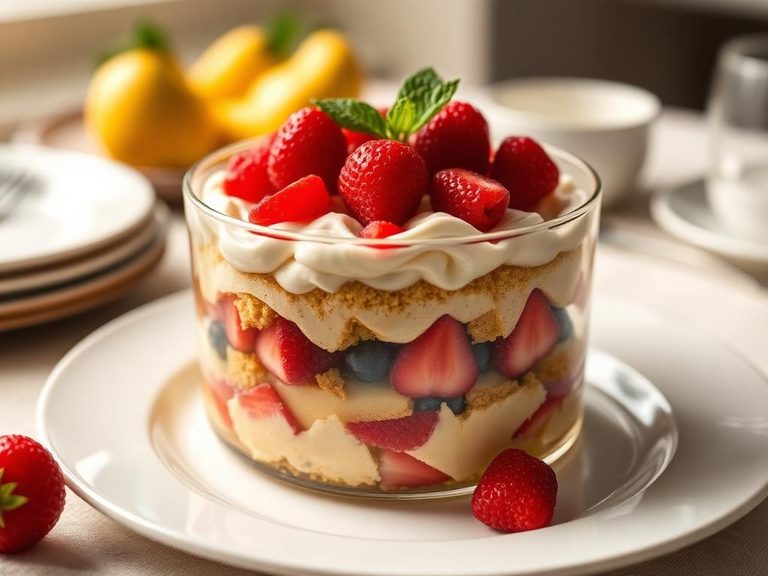
A trifle base is a light, airy sponge cake or ladyfinger layer soaked in fruit juice, sherry, or a sweet liqueur, forming the foundational layer of the classic English trifle dessert. It is typically made from sponge cake, ladyfingers, or pound cake, often combined with fruit preserves or fresh fruit. This dessert originates from England, with variations found across the United Kingdom and Commonwealth countries.
🍽️ Nutrition at a glance
The base is high in carbohydrates and sugar, providing a quick source of energy. It offers minimal protein and fat, with key nutrients coming from any added fruit, such as vitamin C and potassium, and a typical serving contains around 200-300 calories.
Nutrition breakdown
| Calories | 250 kcal |
| Protein | 3 g |
| Carbs | 45 g |
| Fat | 5 g |
| Fiber | 1 g |
| Sugar | 25 g |
| Sodium | 150 mg |
| Potassium | 100 mg |
| Iron | 1.5 mg |
| Calcium | 40 mg |
| Vitamin C | 5 mg |
| Thiamin (B1) | 0.1 mg |
| Riboflavin (B2) | 0.1 mg |
| Niacin (B3) | 1 mg |
| Folate | 30 µg |
Per 1 cup (150 g) · estimated, varies by recipe
💡 What's interesting
Culturally, the trifle base is a cornerstone of British festive dining, often served at Christmas and family gatherings, symbolizing comfort and tradition. Nutritionally, its soaked sponge can act as a vehicle for fruit, potentially adding fiber and vitamins to an otherwise indulgent dessert.
🍽️ Related dishes
AI estimate may be inaccurate · Terms