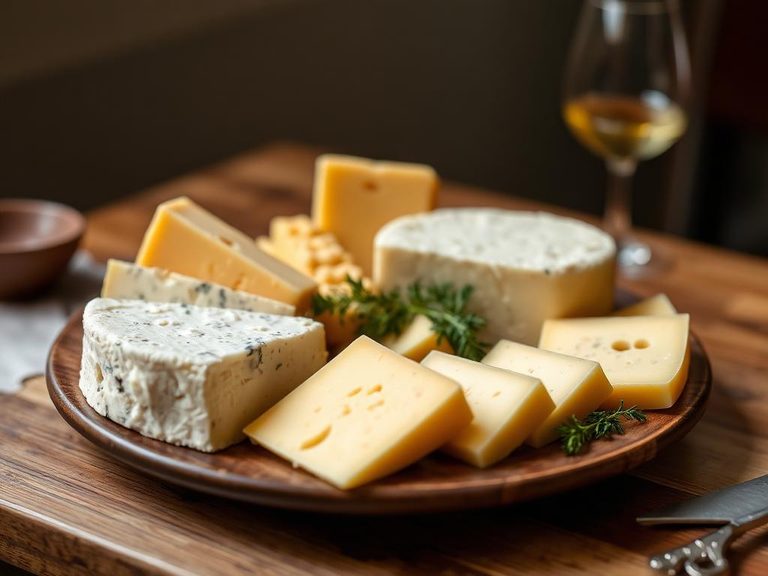
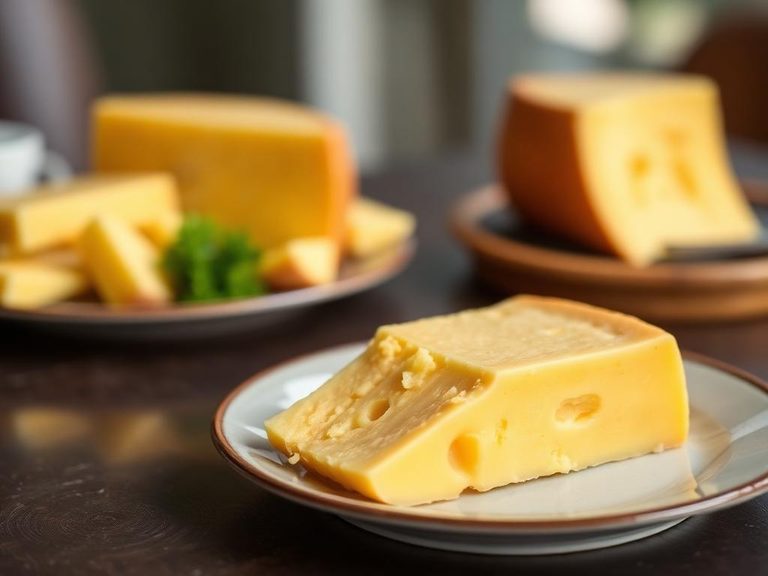
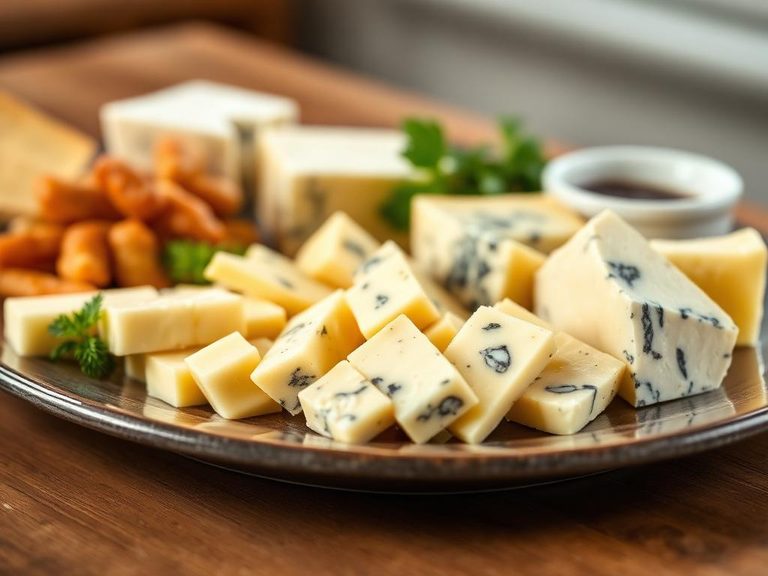
Aged Cheddar or Gruyère Cheese
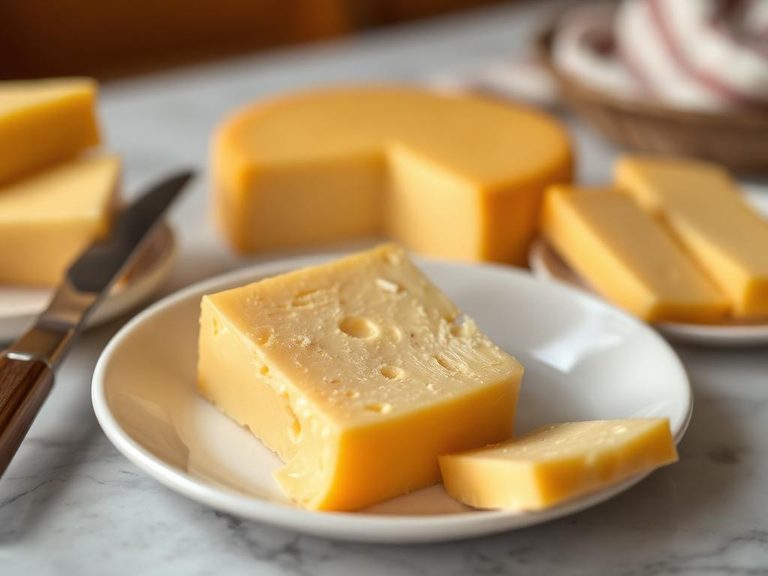
Aged Cheddar and Gruyère are hard, flavorful cheeses known for their deep, complex tastes developed through months or years of aging. Cheddar, originating from the English village of Cheddar in Somerset, offers a sharp, tangy profile, while Swiss Gruyère, from the Fribourg region, provides a nutty, slightly sweet flavor with excellent melting properties. Both are celebrated for their versatility in cooking, from gourmet grilled cheese sandwiches to sophisticated sauces and gratins.
🍽️ Nutrition at a glance
These cheeses are high in fat and protein, with virtually no carbohydrates, making them a nutrient-dense food. They are excellent sources of calcium, phosphorus, and vitamin B12, with a typical 1-ounce (28g) serving providing around 110-120 calories.
Nutrition breakdown
| Calories | 110 kcal |
| Protein | 7 g |
| Carbs | 0.4 g |
| Fat | 9 g |
| Fiber | 0 g |
| Sugar | 0.1 g |
| Sodium | 170 mg |
| Calcium | 200 mg |
| Phosphorus | 140 mg |
| Vitamin A | 85 mcg RAE |
| Vitamin B12 | 0.2 mcg |
| Zinc | 1.0 mg |
| Selenium | 5 mcg |
| Riboflavin (B2) | 0.06 mg |
| Cholesterol | 25 mg |
Per 1 oz (28 g) · estimated, varies by recipe
💡 What's interesting
The aging process is what gives these cheeses their distinctive character; longer aging intensifies flavor and creates a crumblier texture, with some aged cheddars developing natural crystalline crunch from calcium lactate. Nutritionally, the fermentation process can make them easier to digest for some people, and the high protein content helps promote satiety.