Acorn flour
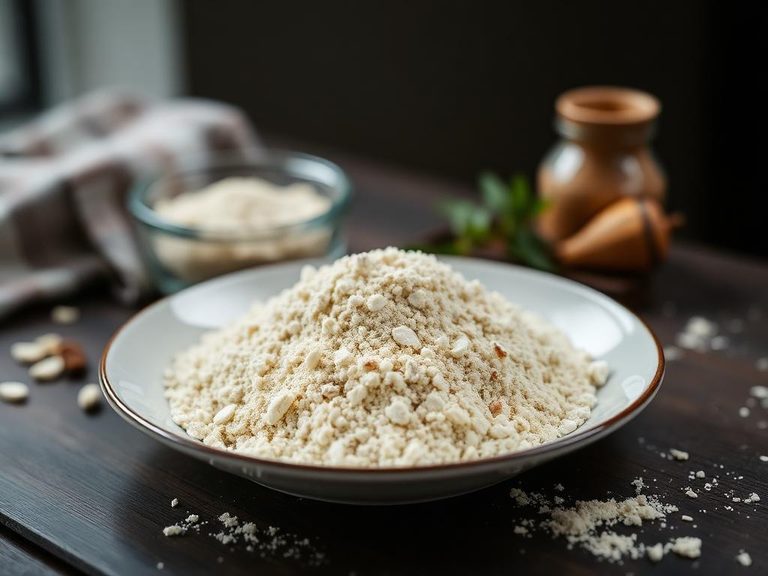
Acorn flour is a gluten-free flour made from ground acorns, the nuts of oak trees. It is traditionally produced by leaching the tannins from the acorns to remove bitterness before drying and grinding them. This flour has historical roots in the cuisines of Native American tribes, Korea, and parts of Europe, where it was a vital survival food.
🍽️ Nutrition at a glance
Acorn flour is a nutrient-dense, low-fat flour that is a good source of complex carbohydrates and dietary fiber. It provides a moderate amount of protein and is notably rich in minerals like potassium and magnesium, with a rough calorie estimate of 120-150 calories per 1/4 cup (30g) serving.
Nutrition breakdown
| Calories | 130 kcal |
| Protein | 2.5 g |
| Carbs | 28 g |
| Fat | 1.5 g |
| Fiber | 5 g |
| Sugar | 1 g |
| Sodium | 0 mg |
| Potassium | 200 mg |
| Magnesium | 30 mg |
| Manganese | 0.5 mg |
| Iron | 0.8 mg |
| Phosphorus | 45 mg |
| Copper | 0.15 mg |
| Vitamin B6 | 0.05 mg |
| Thiamine (B1) | 0.04 mg |
Per 1/4 cup (30g) · estimated, varies by recipe
💡 What's interesting
Culturally, acorn flour represents a deep connection to foraging and sustainable living, as it transforms a free, abundant wild resource into a versatile staple. Nutritionally, its high fiber content and unique mineral profile set it apart from many grain-based flours.