

Acorn dumplings
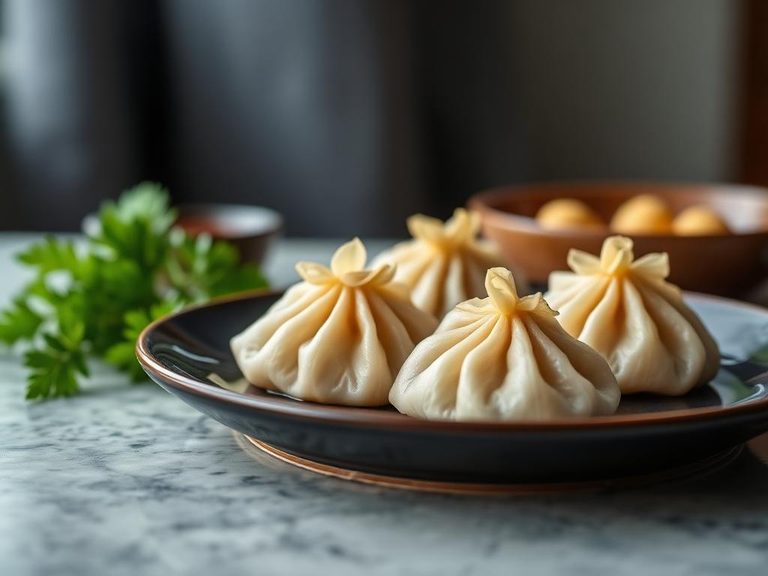
Acorn dumplings, known as 'dotori-mandu' in Korean cuisine, are a traditional dish made from a dough of acorn flour, wheat flour, and sometimes rice flour, typically filled with a savory mixture of vegetables and meat. They are a seasonal autumn specialty, reflecting the historical use of foraged acorns as a food source in Korean mountain villages.
🍽️ Nutrition at a glance
This dish is primarily a source of carbohydrates from the acorn and wheat flours, with moderate protein from the filling. Acorn flour is notably high in dietary fiber and provides minerals like potassium, with a typical serving containing around 250-350 calories.
Nutrition breakdown
| Calories | 300 kcal |
| Protein | 12 g |
| Carbs | 40 g |
| Fat | 10 g |
| Fiber | 5 g |
| Sugar | 3 g |
| Sodium | 480 mg |
| Potassium | 280 mg |
| Iron | 2.5 mg |
| Magnesium | 45 mg |
| Phosphorus | 120 mg |
| Vitamin B6 | 0.3 mg |
| Manganese | 0.8 mg |
| Copper | 0.2 mg |
| Selenium | 8 µg |
Per 6 dumplings (approx. 180 g) · estimated, varies by recipe
💡 What's interesting
Acorn flour has a unique, slightly nutty and earthy flavor, and its use in dumplings is a fascinating example of culinary adaptation, transforming a foraged, tannin-rich nut into a palatable and nutritious staple.
🍽️ Related dishes

AI estimate may be inaccurate · Terms