

Yam congee
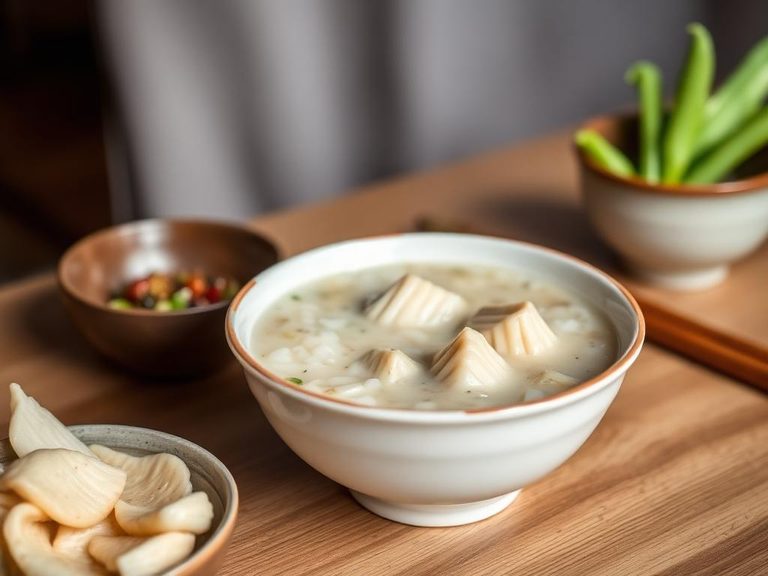
Yam congee is a comforting, savory rice porridge slow-cooked with chunks of soft, starchy yam until the grains break down into a creamy base. It's a staple home-style dish across many Asian cuisines, often enjoyed for breakfast or as a gentle meal when seeking warmth and nourishment. The simple preparation allows the natural sweetness of the yam to shine.
🍽️ Nutrition at a glance
This dish is primarily a source of complex carbohydrates for sustained energy, with the yam adding dietary fiber, potassium, and some vitamin C. A typical serving is relatively low in fat and protein unless enriched, and generally falls in the 200-300 calorie range, making it a light yet filling option.
Nutrition breakdown
| Calories | 110 kcal |
| Protein | 2 g |
| Carbs | 24 g |
| Fat | 0.5 g |
| Fiber | 3 g |
| Sugar | 2 g |
| Sodium | 150 mg |
| Potassium | 350 mg |
| Magnesium | 30 mg |
| Phosphorus | 45 mg |
| Manganese | 0.5 mg |
| Vitamin B6 | 0.15 mg |
| Vitamin C | 3 mg |
| Iron | 1.0 mg |
| Zinc | 0.4 mg |
Per 1 cup (240 g) · estimated, varies by recipe
💡 What's interesting
Culturally, congee is deeply associated with healing and comfort in many Asian traditions, often served to the elderly, children, or those recovering from illness. Nutritionally, the slow-cooking process makes the nutrients highly bioavailable and easy to digest, while the yam contributes beneficial plant compounds.
🍽️ Related dishes


AI estimate may be inaccurate · Terms