

Tonjiru
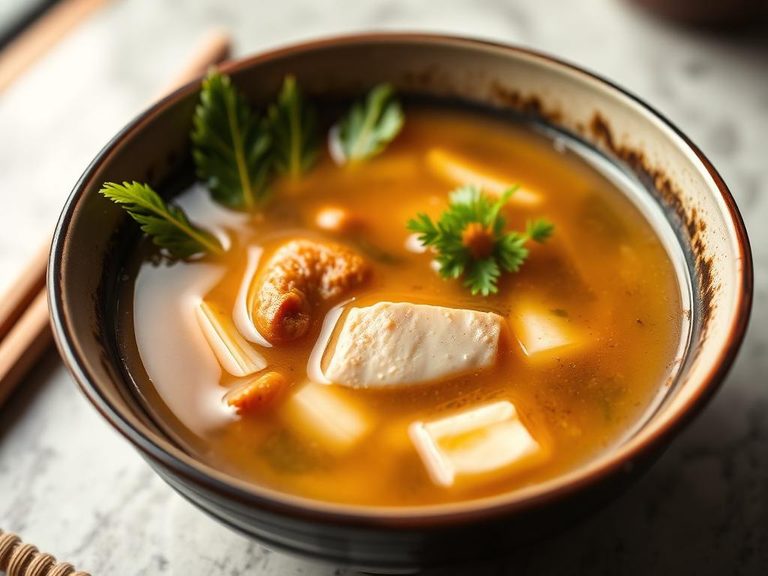
Tonjiru, also known as Butajiru, is a hearty and robust Japanese soup made with pork and miso paste. Unlike standard miso soup, it features a rich variety of root vegetables like daikon, carrot, and konnyaku, along with tofu and leafy greens, creating a thick, stew-like consistency. This comforting dish is a staple in Japanese home cooking, especially popular during colder months.
🍽️ Nutrition at a glance
Tonjiru is a well-balanced dish, offering a good mix of protein from the pork and tofu, complex carbohydrates from the root vegetables, and healthy fats from the pork. It is a good source of dietary fiber, vitamins, and minerals like potassium, with a typical serving containing around 150-250 calories.
Nutrition breakdown
| Calories | 120 kcal |
| Protein | 8 g |
| Carbs | 10 g |
| Fat | 5 g |
| Fiber | 2 g |
| Sugar | 3 g |
| Sodium | 600 mg |
| Potassium | 350 mg |
| Vitamin B1 (Thiamine) | 0.3 mg |
| Vitamin B2 (Riboflavin) | 0.15 mg |
| Vitamin B6 | 0.2 mg |
| Niacin (B3) | 3 mg |
| Phosphorus | 120 mg |
| Zinc | 1.5 mg |
| Iron | 1.2 mg |
Per 1 bowl (300 g) · estimated, varies by recipe
💡 What's interesting
Culturally, Tonjiru is considered a 'stick-to-your-ribs' meal that embodies the Japanese concept of 'ichiju sansai' (one soup, three sides) in a single pot. Nutritionally, the fermentation of the miso paste provides probiotics, while the combination of pork and vegetables creates a synergistic effect for better nutrient absorption.
AI estimate may be inaccurate · Terms