

Soft-shell crab tempura
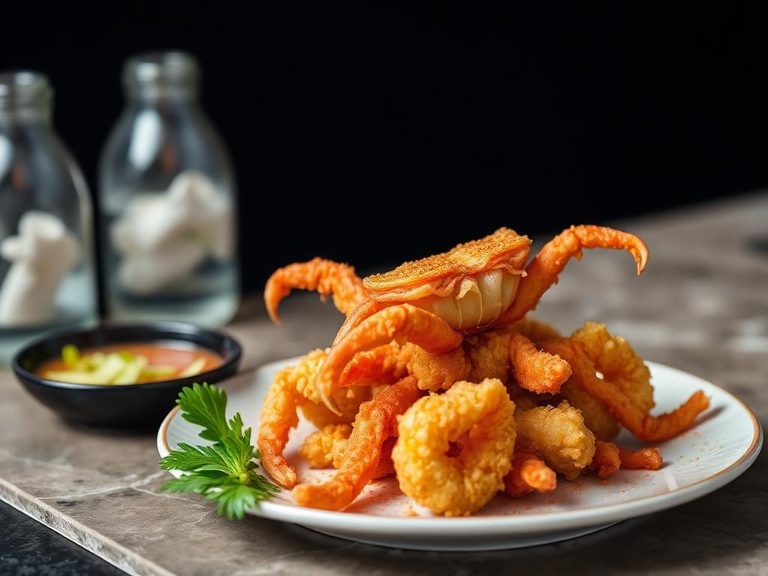
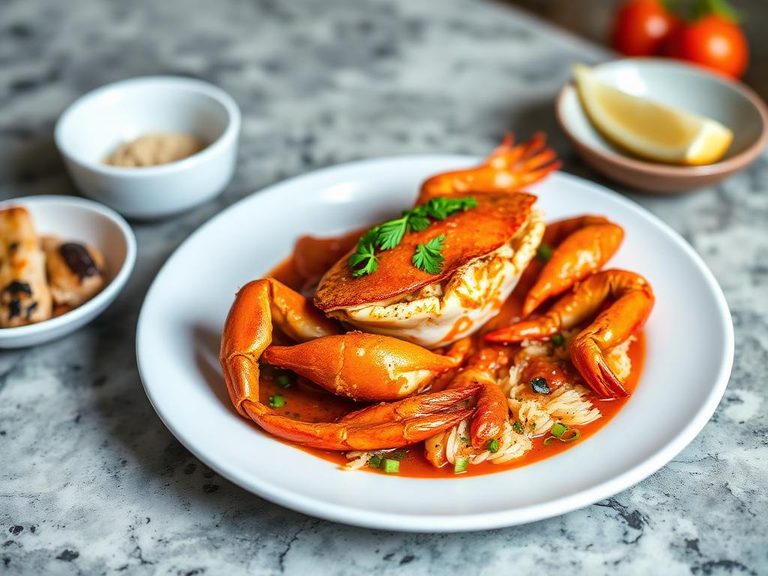
Soft-shell crab tempura is a Japanese dish featuring whole, young crabs that are battered and deep-fried until crispy. The dish uses the entire crab, including the edible shell, legs, and claws, typically served with tentsuyu dipping sauce and grated daikon. It originates from Japanese cuisine, where tempura techniques were influenced by Portuguese frying methods.
🍽️ Nutrition at a glance
This dish is high in fat and protein due to the deep-fried batter and crab meat, with a moderate amount of carbohydrates from the tempura coating. A typical serving provides a good source of omega-3 fatty acids, vitamin B12, and minerals like zinc and selenium, with an approximate calorie range of 350-450 kcal per serving.
Nutrition breakdown
| Calories | 400 kcal |
| Protein | 22 g |
| Carbs | 25 g |
| Fat | 24 g |
| Fiber | 1 g |
| Sugar | 1 g |
| Sodium | 580 mg |
| Vitamin B12 | 8.5 mcg |
| Selenium | 42 mcg |
| Zinc | 3.2 mg |
| Phosphorus | 210 mg |
| Omega-3 (EPA+DHA) | 0.4 g |
| Copper | 0.8 mg |
| Vitamin E | 1.8 mg |
| Cholesterol | 125 mg |
Per 1 serving (about 120g, 2-3 medium crabs) · estimated, varies by recipe
💡 What's interesting
Culturally, soft-shell crab tempura showcases the Japanese philosophy of minimizing food waste by utilizing the entire crab at a specific molt stage. Nutritionally, the quick-frying method helps retain the crab's delicate nutrients while the shell becomes edible, providing additional calcium.
🍽️ Related dishes
AI estimate may be inaccurate · Terms