

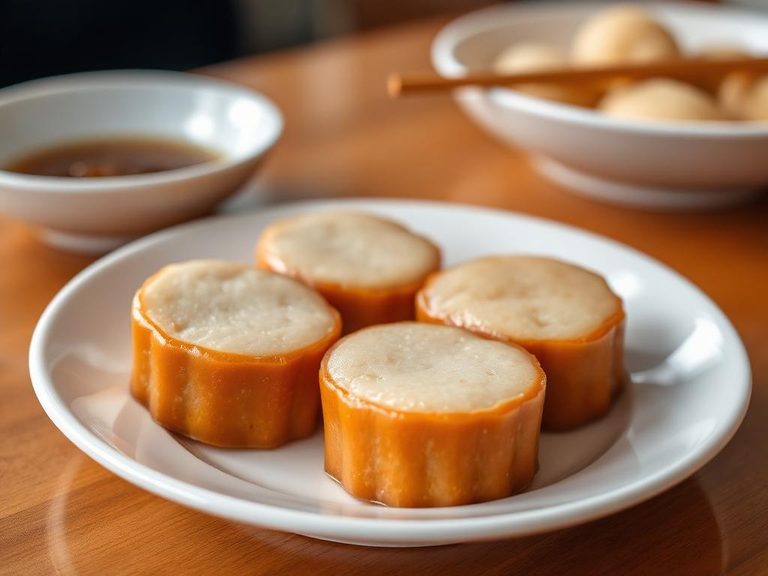
Simply boiled or roasted taro served as a side dish
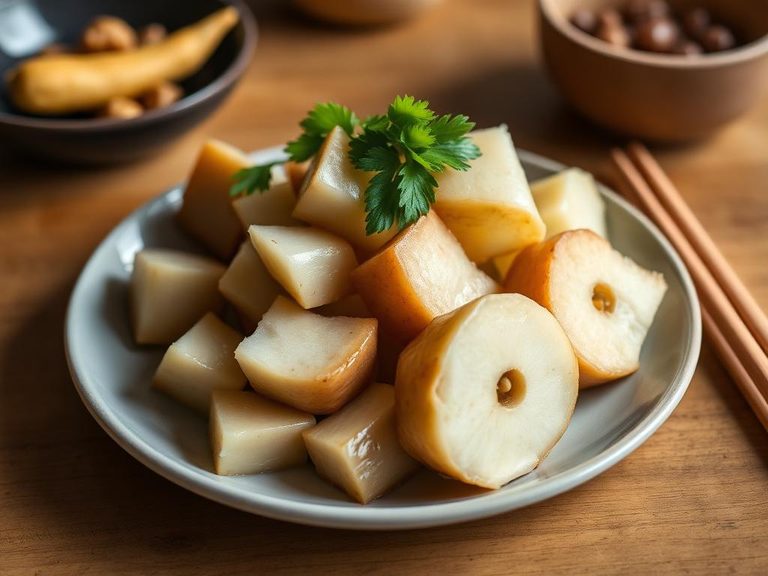
Simply boiled or roasted taro is a starchy root vegetable side dish, often prepared with minimal seasoning to highlight its earthy, nutty flavor. It is a staple in many tropical and subtropical cuisines, particularly across Southeast Asia, the Pacific Islands, and parts of Africa and the Caribbean.
🍽️ Nutrition at a glance
This dish is primarily a source of complex carbohydrates and dietary fiber, providing a moderate amount of calories per serving. It is a good source of essential minerals like potassium and manganese, while being naturally low in fat and protein.
Nutrition breakdown
| Calories | 187 kcal |
| Protein | 1.5 g |
| Carbs | 46 g |
| Fat | 0.2 g |
| Fiber | 6.8 g |
| Sugar | 0.4 g |
| Sodium | 11 mg |
| Potassium | 474 mg |
| Manganese | 0.7 mg |
| Vitamin B6 | 0.3 mg |
| Vitamin E | 2.4 mg |
| Magnesium | 23 mg |
| Phosphorus | 76 mg |
| Iron | 0.6 mg |
| Copper | 0.2 mg |
Per 1 cup (132 g) · estimated, varies by recipe
💡 What's interesting
Taro is one of the earliest cultivated crops and holds deep cultural significance in many Polynesian societies, often considered a gift from the gods. Nutritionally, its resistant starch content can act as a prebiotic, supporting gut health.
🍽️ Related dishes




AI estimate may be inaccurate · Terms