

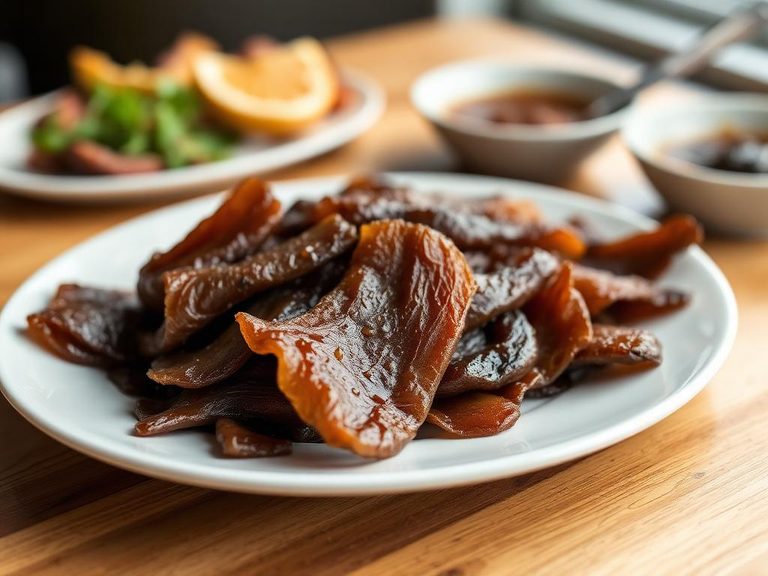
Roasted sea liver with traditional herbs
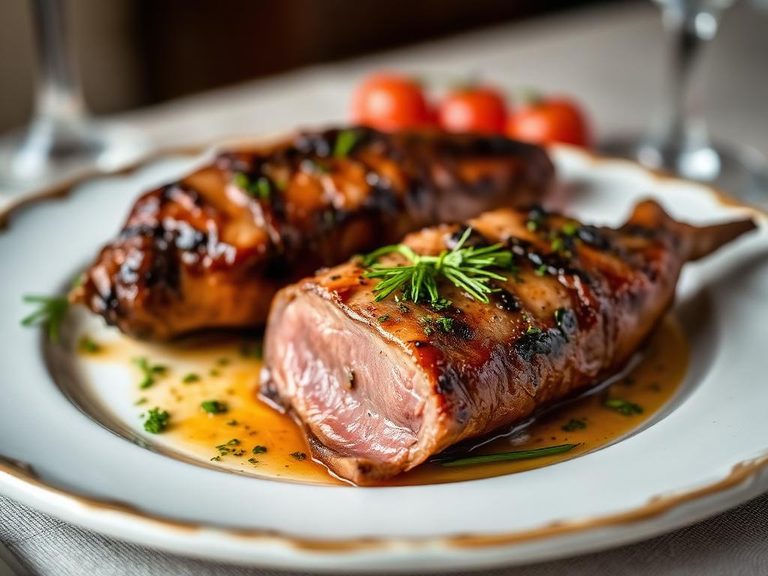
Roasted sea liver with traditional herbs is a savory, nutrient-dense dish featuring the liver of sea mammals (such as seal or whale) or, in some coastal regions, large fish like monkfish, seasoned with herbs like thyme, rosemary, and juniper. It is a traditional delicacy found in Arctic, Nordic, and some coastal communities, valued for its rich flavor and historical importance as a source of essential nutrients in harsh climates.
🍽️ Nutrition at a glance
This dish is exceptionally high in protein and healthy fats, particularly omega-3 fatty acids, while being very low in carbohydrates. A typical serving provides a significant amount of vitamins A, D, and B12, along with iron and selenium, with a calorie range of approximately 250–350 kcal depending on the exact source and preparation.
Nutrition breakdown
| Calories | 280 kcal |
| Protein | 22 g |
| Carbs | 0 g |
| Fat | 21 g |
| Fiber | 0 g |
| Sugar | 0 g |
| Sodium | 120 mg |
| Vitamin A | 4500 IU (90% DV) |
| Vitamin D | 15 mcg (75% DV) |
| Vitamin B12 | 18 mcg (750% DV) |
| Iron | 4.5 mg (25% DV) |
| Selenium | 40 mcg (73% DV) |
| Omega-3 (EPA+DHA) | 1.2 g |
| Cholesterol | 280 mg |
| Zinc | 3.5 mg (32% DV) |
Per 100 g (3.5 oz) · estimated, varies by recipe
💡 What's interesting
Culturally, sea liver has been a vital survival food for indigenous Arctic peoples, offering concentrated energy and fat-soluble vitamins during long winters. Nutritionally, it's a rare food source of preformed vitamin D and omega-3s in a highly bioavailable form, making it uniquely supportive of bone and cardiovascular health.
🍽️ Related dishes
AI estimate may be inaccurate · Terms