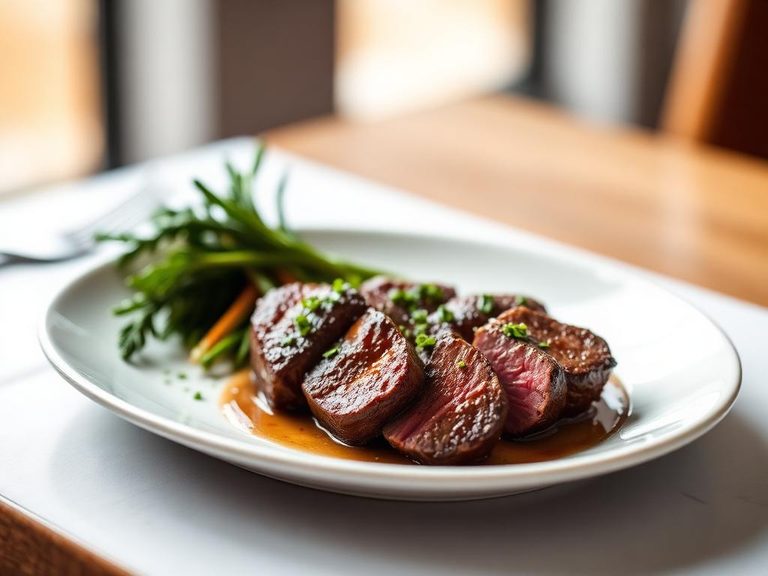
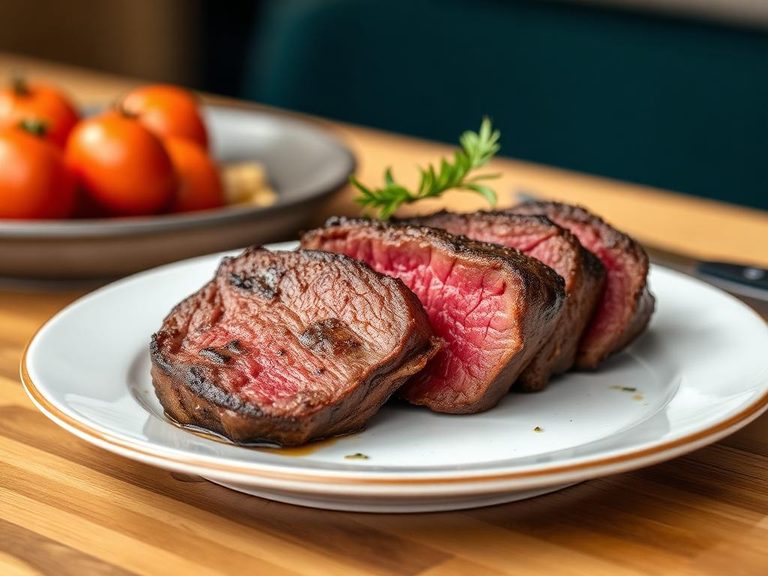
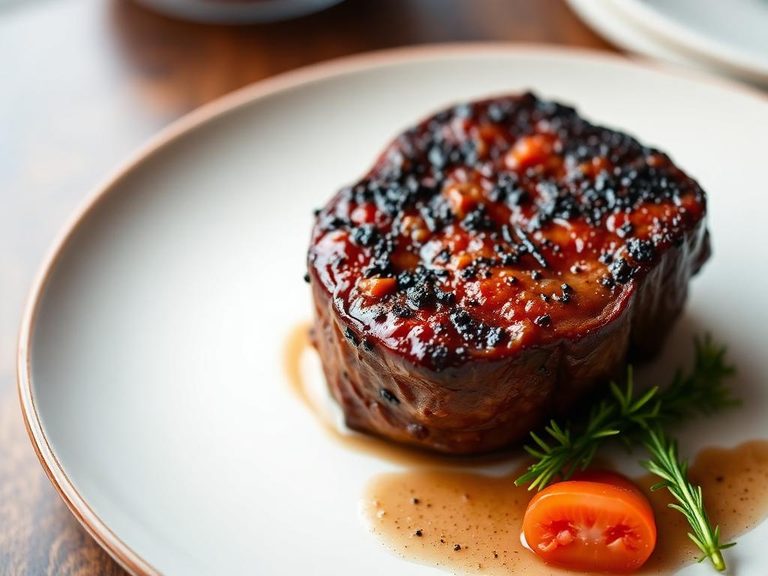
Pork Filet Mignon
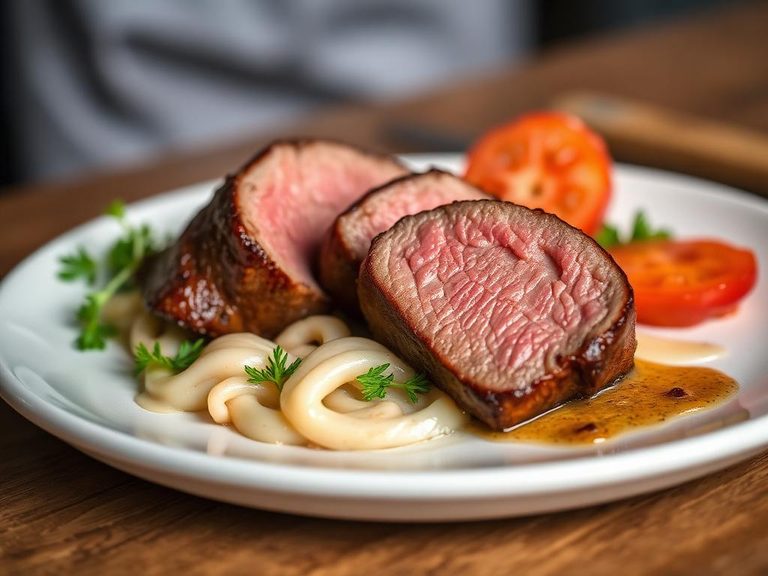
Pork filet mignon is a premium cut taken from the tenderloin of the pig, known for its lean, tender texture and mild flavor. Typically prepared by pan-searing, grilling, or roasting, it is often seasoned simply with salt, pepper, and herbs to highlight its natural taste. This dish is popular in Western cuisines, particularly in French and American cooking, where it is valued as an elegant, quick-cooking main course.
🍽️ Nutrition at a glance
Pork filet mignon is high in protein and relatively low in fat compared to other pork cuts, making it a lean source of essential nutrients like B vitamins, zinc, and selenium. A typical serving (around 4 ounces or 113 grams) provides approximately 150-200 calories, depending on preparation methods.
Nutrition breakdown
| Calories | 180 kcal |
| Protein | 26 g |
| Carbs | 0 g |
| Fat | 8 g |
| Fiber | 0 g |
| Sugar | 0 g |
| Sodium | 55 mg |
| Iron | 1.2 mg |
| Zinc | 3.5 mg |
| Phosphorus | 230 mg |
| Potassium | 380 mg |
| Niacin (B3) | 8.5 mg |
| Vitamin B6 | 0.5 mg |
| Vitamin B12 | 0.8 mcg |
| Selenium | 35 mcg |
Per 4 oz (113 g) · estimated, varies by recipe
💡 What's interesting
Culturally, pork filet mignon is often considered a 'healthier' red meat option due to its low fat content, and it has gained popularity in modern diets focused on high-protein, lower-carb eating. Nutritionally, it stands out for being one of the leanest cuts of pork, offering a good balance of flavor and nutrition without the heaviness associated with fattier meats.