

Pork Belly
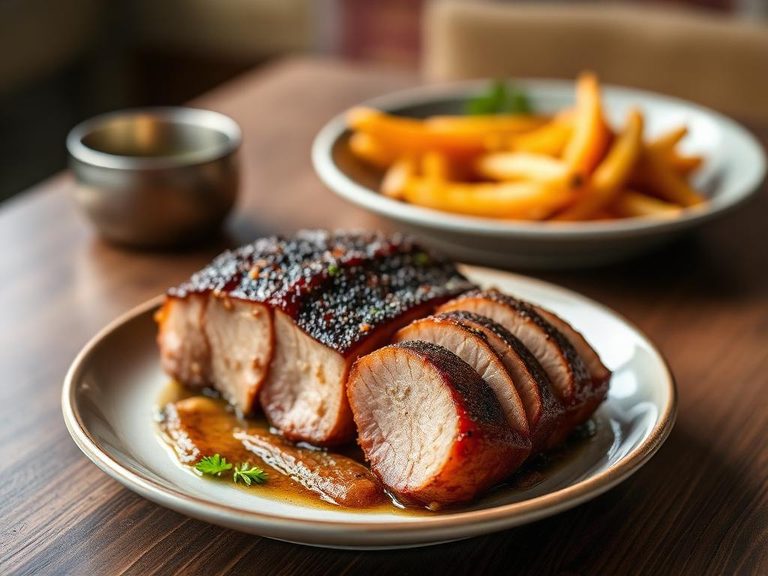
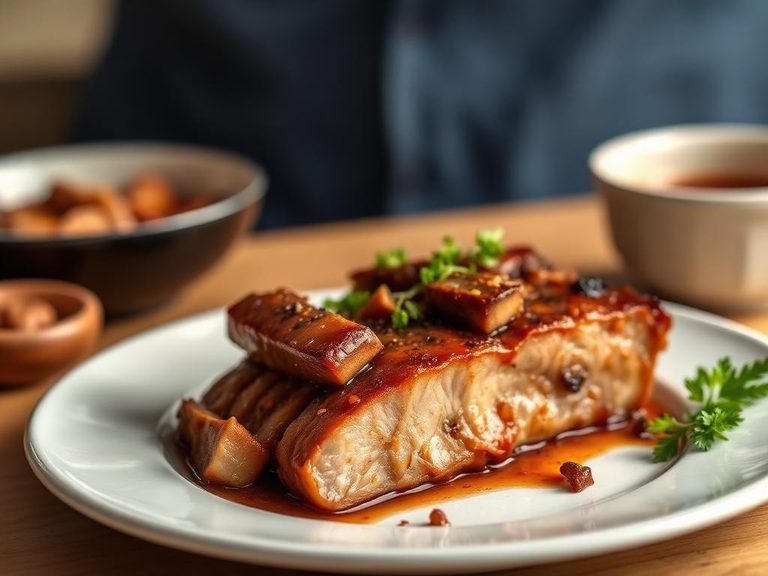
Pork belly is a boneless cut of fatty meat from the underside of a pig, prized for its rich layers of fat and meat. It's a staple in many cuisines worldwide, from Chinese crispy roast pork belly (Siu Yuk) and Korean samgyeopsal to Italian pancetta and Mexican tacos al pastor. The cut is typically slow-roasted, braised, or pan-fried to render the fat and achieve a tender, flavorful result.
🍽️ Nutrition at a glance
Pork belly is very high in fat and protein, with negligible carbohydrates. A typical serving provides a significant amount of calories, along with key nutrients like B vitamins (especially B1, B6, and B12), selenium, and zinc, but is also high in saturated fat and sodium.
Nutrition breakdown
| Calories | 430 kcal |
| Protein | 13 g |
| Carbs | 0 g |
| Fat | 43 g |
| Fiber | 0 g |
| Sugar | 0 g |
| Sodium | 320 mg |
| Thiamin (B1) | 0.3 mg |
| Vitamin B12 | 0.5 mcg |
| Niacin (B3) | 3.5 mg |
| Vitamin B6 | 0.3 mg |
| Selenium | 18 mcg |
| Zinc | 2.5 mg |
| Phosphorus | 150 mg |
| Potassium | 200 mg |
Per 1 serving (85 g, about 3 oz, cooked) · estimated, varies by recipe
💡 What's interesting
Culturally, pork belly is a celebratory food in many Asian cuisines, often served during festivals and holidays. Nutritionally, while calorie-dense, it's a complete protein source and provides essential micronutrients, making it a valuable component of a balanced diet when consumed in moderation.
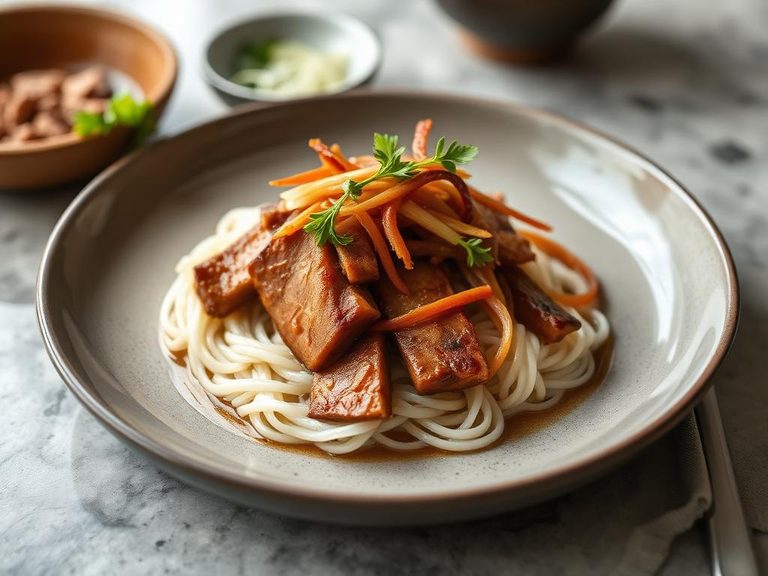
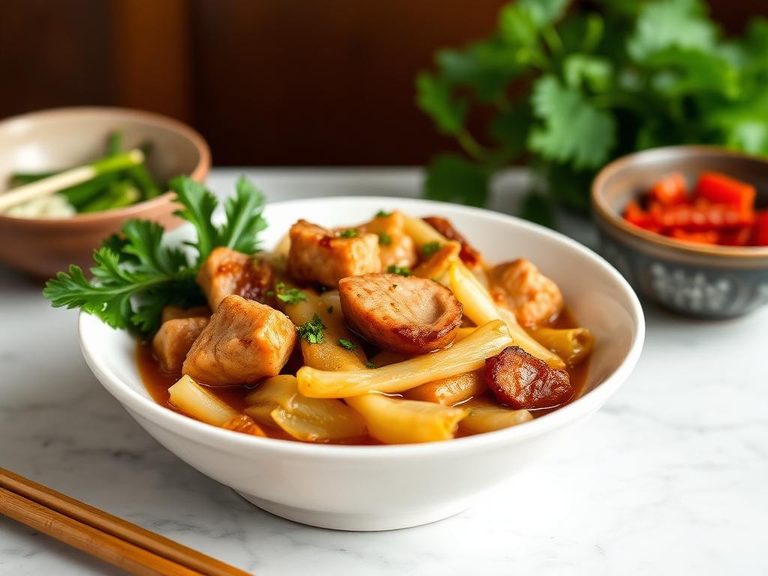
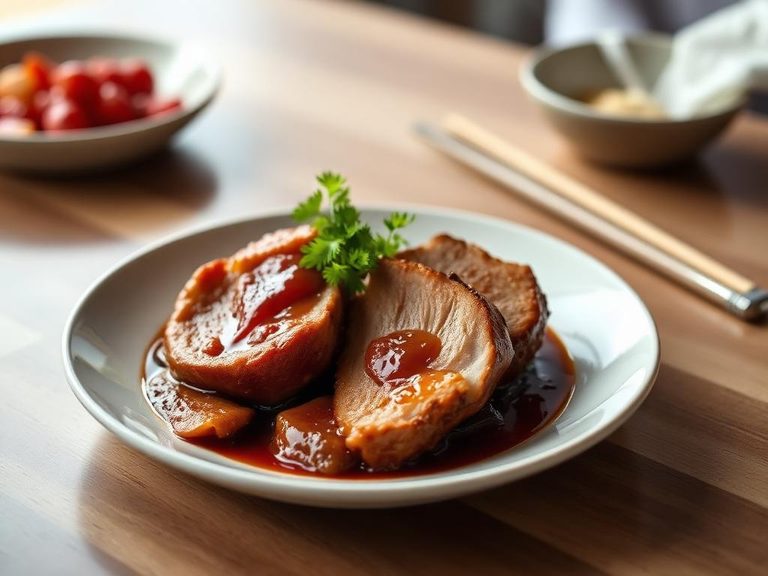
🍽️ Related dishes

AI estimate may be inaccurate · Terms