

Popiah
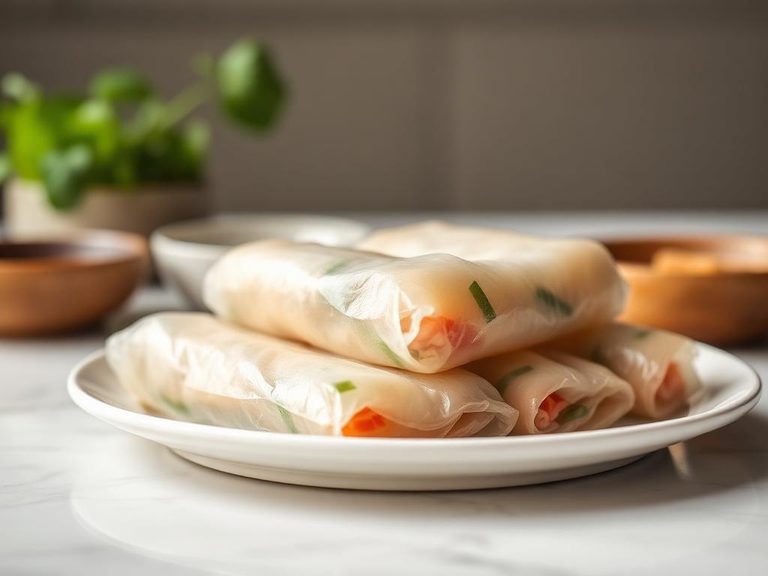
Popiah is a fresh, non-fried spring roll originating from the Fujian and Teochew regions of China, popular across Southeast Asia, especially in Malaysia, Singapore, and Taiwan. Its thin, soft wheat or rice-flour crepe is typically filled with a savory-sweet mixture of jicama (bangkuang), carrots, bean sprouts, lettuce, and sometimes minced meat, shrimp, or tofu, all seasoned with a sweet sauce, chili paste, and crushed peanuts.
🍽️ Nutrition at a glance
Popiah is generally a balanced, lower-fat option compared to fried rolls, with carbohydrates from the wrapper and vegetables, moderate protein from fillings like shrimp or tofu, and a good amount of dietary fiber and vitamins (like vitamin C and A) from the fresh vegetables. A single roll typically contains around 100-150 calories, depending on size and filling.
Nutrition breakdown
| Calories | 200 kcal |
| Protein | 8 g |
| Carbs | 25 g |
| Fat | 7 g |
| Fiber | 4 g |
| Sugar | 5 g |
| Sodium | 450 mg |
| Vitamin A | 150 mcg RAE |
| Vitamin C | 10 mg |
| Vitamin K | 45 mcg |
| Folate | 60 mcg |
| Potassium | 350 mg |
| Iron | 2 mg |
| Calcium | 80 mg |
| Manganese | 0.8 mg |
Per 1 roll (approx. 150 g) · estimated, varies by recipe
💡 What's interesting
Culturally, Popiah is often associated with the Qingming Festival (Tomb-Sweeping Day) in some communities, symbolizing renewal and respect for ancestors. Nutritionally, its raw vegetable filling and non-fried preparation make it a uniquely fresh and light dish, preserving more of the vegetables' natural nutrients and texture.
AI estimate may be inaccurate · Terms