

Pickled brain
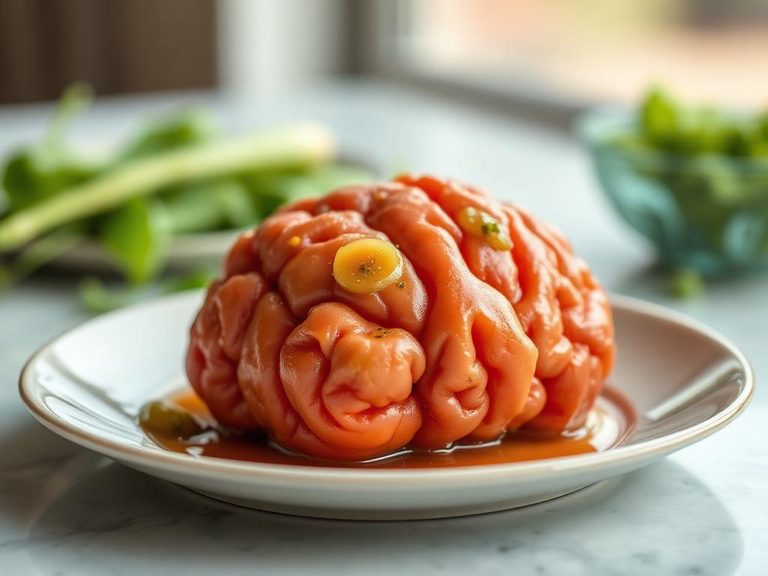
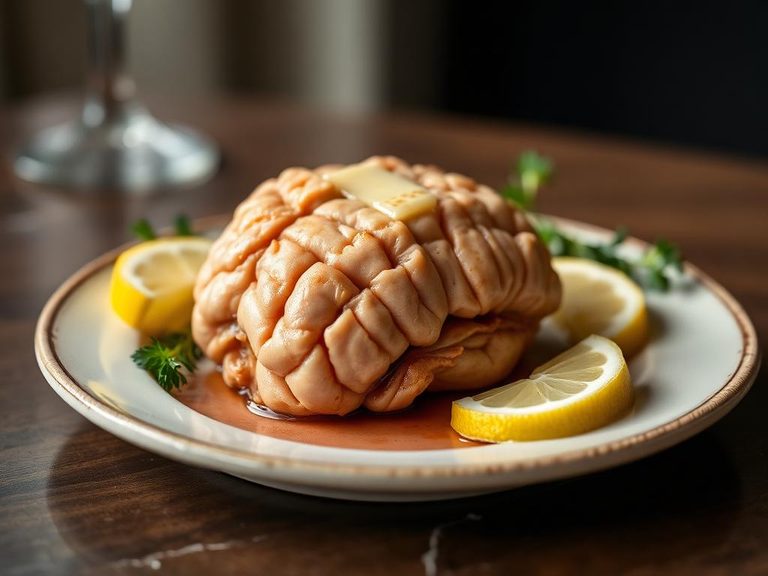
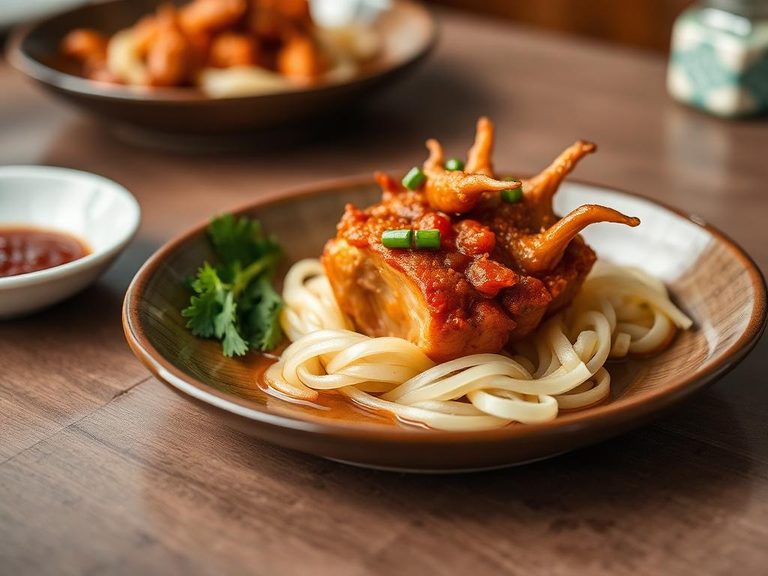
Pickled brain is a traditional delicacy made from animal brains (typically beef, pork, or sheep) that are marinated in a brine of vinegar, salt, and spices. It is a preserved food found in various culinary traditions, including parts of Eastern Europe, the Middle East, and Asia, often served cold as an appetizer or part of a charcuterie spread.
🍽️ Nutrition at a glance
This dish is high in protein and fat, with virtually no carbohydrates. It is a dense source of nutrients like iron, vitamin B12, and choline, but also very high in sodium due to the pickling brine.
Nutrition breakdown
| Calories | 120 kcal |
| Protein | 8 g |
| Carbs | 1 g |
| Fat | 9 g |
| Fiber | 0 g |
| Sugar | 0 g |
| Sodium | 580 mg |
| Vitamin B12 | 3.2 mcg |
| Iron | 2.1 mg |
| Choline | 180 mg |
| Selenium | 14 mcg |
| Phosphorus | 160 mg |
| Zinc | 1.5 mg |
| Vitamin B2 (Riboflavin) | 0.2 mg |
| Copper | 0.3 mg |
Per 2 oz (56 g) · estimated, varies by recipe
💡 What's interesting
Culturally, pickled brains represent a traditional method of preserving and utilizing offal, minimizing food waste. Nutritionally, they are exceptionally rich in choline, a nutrient crucial for brain health that is less commonly found in such concentrated amounts in other foods.
🍽️ Related dishes
AI estimate may be inaccurate · Terms