

Palatschinken
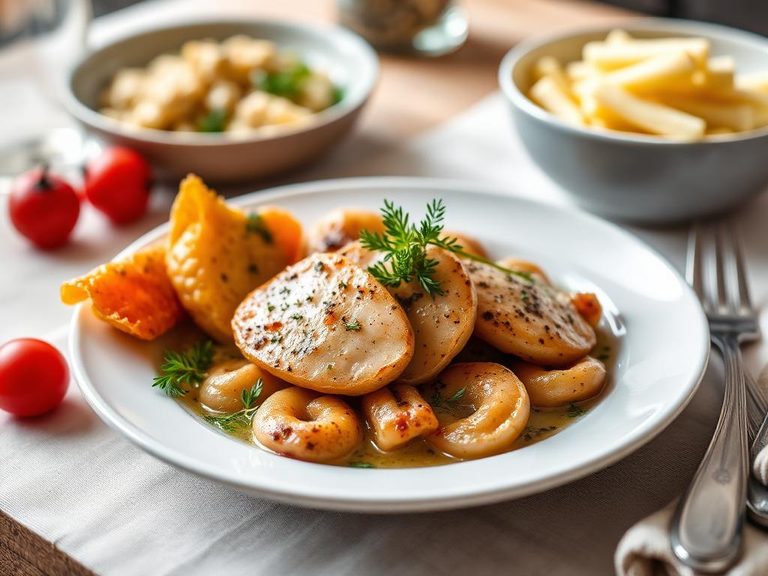
Palatschinken are thin, delicate crêpe-like pancakes originating from Central Europe, particularly popular in Austria, Hungary, and surrounding regions. They are traditionally made from a simple batter of flour, eggs, milk, and a pinch of salt, then typically filled with sweet toppings like apricot jam, sweet cheese, or Nutella, or sometimes savory fillings. The name itself reflects the region's linguistic diversity, with variations like 'Palatschinken' in German and 'palacsinta' in Hungarian.
🍽️ Nutrition at a glance
As a primarily carbohydrate-based dish from its flour and milk content, Palatschinken can be moderate in fat depending on the cooking oil or butter used and the richness of the filling. A standard sweet serving provides a good source of energy from carbs, some protein from the eggs and milk, and key nutrients like calcium and B vitamins. A rough calorie ballpark for a single filled Palatschinke is between 200-350 calories.
Nutrition breakdown
| Calories | 320 kcal |
| Protein | 10 g |
| Carbs | 38 g |
| Fat | 14 g |
| Fiber | 1.5 g |
| Sugar | 12 g |
| Sodium | 380 mg |
| Calcium | 120 mg |
| Iron | 2.1 mg |
| Potassium | 180 mg |
| Vitamin A | 120 µg RAE |
| Vitamin D | 1.0 µg |
| Vitamin B12 | 0.4 µg |
| Phosphorus | 150 mg |
| Riboflavin (B2) | 0.2 mg |
Per 2 medium pancakes (approx. 150 g) · estimated, varies by recipe
💡 What's interesting
Culturally, Palatschinken are a beloved comfort food and a staple of home cooking and casual dining across Central Europe, often associated with family meals and festive occasions. Nutritionally, their versatility is unique; the same basic pancake can be adapted into a balanced meal with savory fillings like spinach and cheese, or a quick energy boost with sweet toppings, making them a flexible culinary canvas.
AI estimate may be inaccurate · Terms