

Ohagi
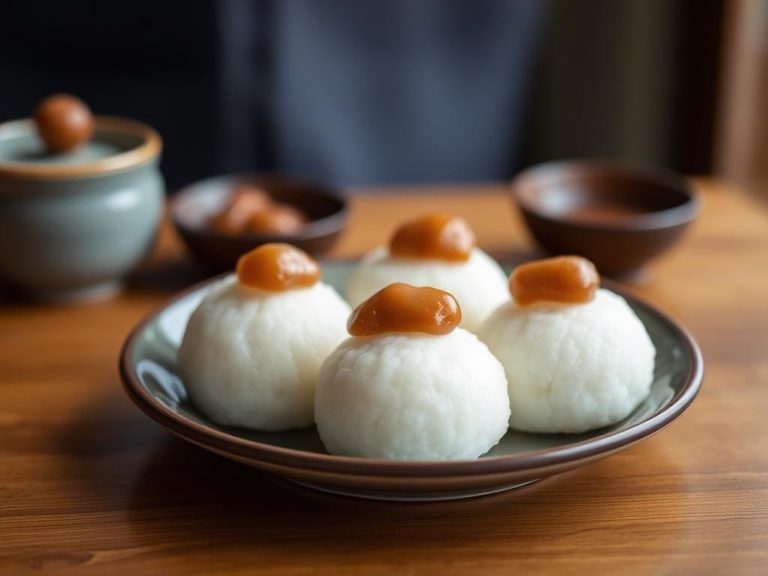
Ohagi is a traditional Japanese sweet rice ball, typically enjoyed during the spring and autumn equinox (Higan) festivals. It's made from a mixture of steamed glutinous rice and sweet red bean paste (anko), often coated with additional anko, kinako (roasted soybean flour), or black sesame seeds. Chestnut (kuri) is a popular seasonal variation, adding a nutty texture and natural sweetness.
🍽️ Nutrition at a glance
Ohagi is a carbohydrate-rich treat, primarily from rice and sweet bean paste, providing quick energy. A single serving offers a good source of plant-based protein and dietary fiber from the beans, along with minerals like potassium and iron, with a calorie count typically between 200-300 kcal.
Nutrition breakdown
| Calories | 220 kcal |
| Protein | 5 g |
| Carbs | 42 g |
| Fat | 2 g |
| Fiber | 3 g |
| Sugar | 15 g |
| Sodium | 50 mg |
| Potassium | 120 mg |
| Iron | 1.2 mg |
| Magnesium | 25 mg |
| Phosphorus | 60 mg |
| Manganese | 0.5 mg |
| Copper | 0.15 mg |
| Thiamin (B1) | 0.08 mg |
| Folate | 15 µg |
Per 1 piece (approx. 80 g) · estimated, varies by recipe
💡 What's interesting
Culturally, ohagi is a symbolic food eaten to honor deceased ancestors during Higan. Nutritionally, the combination of glutinous rice and azuki beans creates a complete protein, making it a more balanced traditional sweet than many others.
AI estimate may be inaccurate · Terms