

Maultaschen
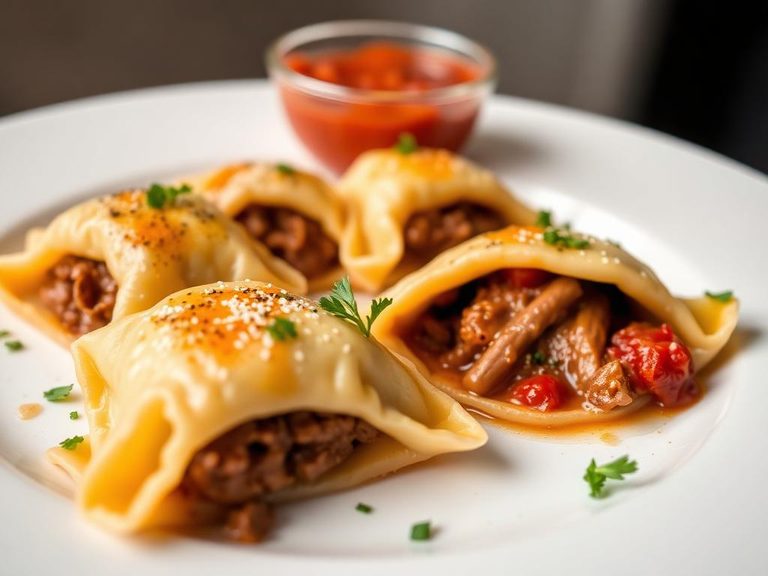
Maultaschen are large, rectangular pasta pockets from the Swabia region of Germany, traditionally filled with a savory mixture of ground meat, spinach, onions, and bread rolls. They are often served either boiled in a clear broth or pan-fried with onions and bacon, making them a hearty and versatile dish.
🍽️ Nutrition at a glance
As a meat-filled pasta, Maultaschen are a balanced source of carbohydrates, protein, and fat. A typical serving provides a good amount of iron and B vitamins from the meat, with a calorie range of approximately 400-600 per portion depending on the preparation method.
Nutrition breakdown
| Calories | 620 kcal |
| Protein | 28 g |
| Carbs | 65 g |
| Fat | 25 g |
| Fiber | 4 g |
| Sugar | 3 g |
| Sodium | 1200 mg |
| Iron | 4.5 mg |
| Potassium | 450 mg |
| Phosphorus | 320 mg |
| Zinc | 3.8 mg |
| Vitamin B1 (Thiamine) | 0.6 mg |
| Vitamin B2 (Riboflavin) | 0.4 mg |
| Niacin (B3) | 8 mg |
| Folate | 75 mcg |
Per 6 pieces (300 g) · estimated, varies by recipe
💡 What's interesting
Legend has it that Maultaschen were invented by monks to 'hide' meat inside pasta during Lent, a playful culinary trick that has become a beloved regional tradition. Nutritionally, they are a complete meal in a pocket, combining the energy of pasta with the sustenance of a meat filling.
AI estimate may be inaccurate · Terms