

Korean Mu Saengchae
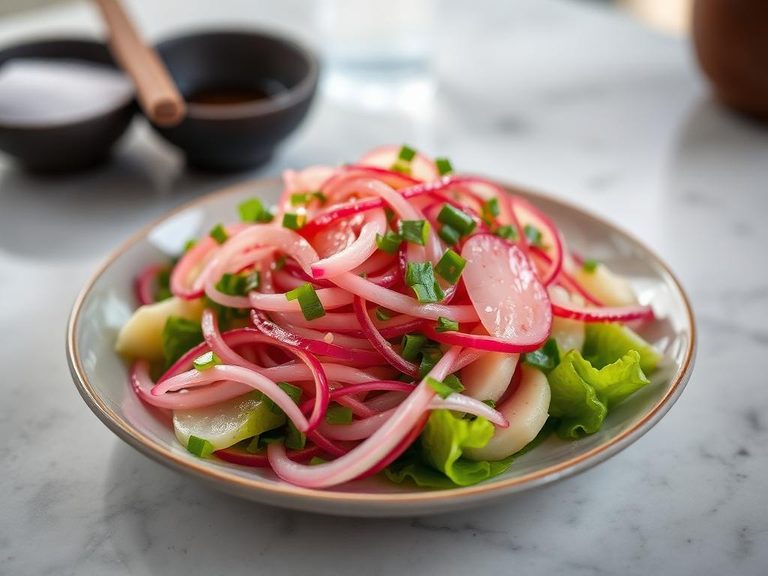
Korean Mu Saengchae is a refreshing, crisp salad made primarily from julienned Korean radish (mu) and sweet Asian pear, often seasoned with vinegar, sugar, and a touch of chili for a balanced sweet, sour, and slightly spicy flavor. It's a popular banchan (side dish) in Korean cuisine, typically served alongside meals to provide a light, palate-cleansing contrast to richer dishes.
🍽️ Nutrition at a glance
This dish is low in calories (around 50-80 per serving) and fat, with most of its carbohydrates coming from natural sugars in the pear and any added sweeteners. It's a good source of dietary fiber, vitamin C from the radish, and hydrating electrolytes, making it a nutritious, low-calorie addition to a meal.
Nutrition breakdown
| Calories | 45 kcal |
| Protein | 1 g |
| Carbs | 10 g |
| Fat | 0.2 g |
| Fiber | 2 g |
| Sugar | 7 g |
| Sodium | 350 mg |
| Potassium | 280 mg |
| Vitamin C | 15 mg |
| Vitamin K | 15 mcg |
| Folate | 25 mcg |
| Manganese | 0.2 mg |
| Calcium | 30 mg |
| Iron | 0.4 mg |
| Magnesium | 15 mg |
Per 1 cup (150 g) · estimated, varies by recipe
💡 What's interesting
Culturally, Mu Saengchae is cherished for its role in balancing the Korean meal's five flavors (sweet, sour, salty, bitter, spicy) and is often eaten to aid digestion. Nutritionally, the combination of radish and pear is unique because the pear's natural enzymes help tenderize the radish and enhance nutrient absorption, while both ingredients are known for their detoxifying properties in Korean food philosophy.
🍽️ Related dishes

AI estimate may be inaccurate · Terms