

Kishk
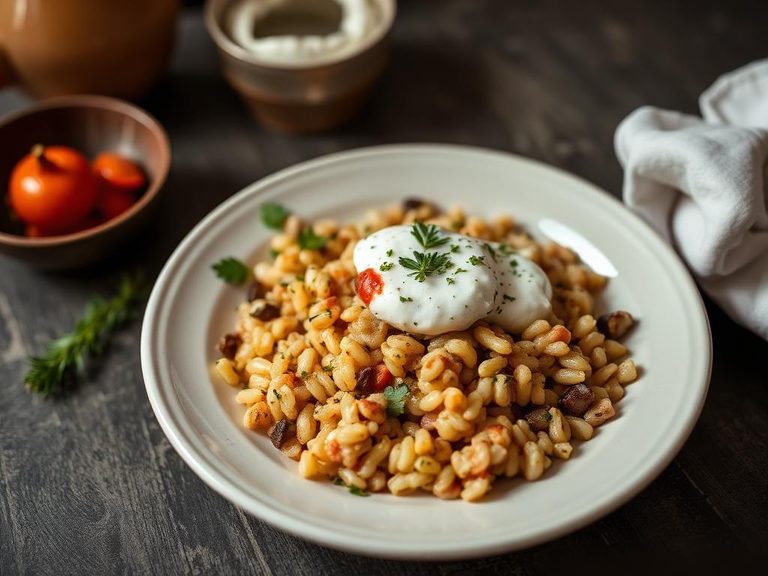
Kishk is a traditional fermented staple food made from a mixture of cracked wheat and yogurt, which is sun-dried into a hard powder or paste. It is a cornerstone of Levantine and broader Middle Eastern cuisine, particularly in Syria, Lebanon, Palestine, and Jordan, where it is used as a base for soups, stews, and sauces.
🍽️ Nutrition at a glance
As a dried blend of grain and dairy, Kishk is a calorie-dense source of carbohydrates from the wheat and protein and fat from the yogurt. A typical serving provides a good amount of B vitamins, calcium, and probiotics from the fermentation process, with a rough ballpark of 350-400 calories per 100 grams.
Nutrition breakdown
| Calories | 210 kcal |
| Protein | 12 g |
| Carbs | 25 g |
| Fat | 7 g |
| Fiber | 4 g |
| Sugar | 5 g |
| Sodium | 480 mg |
| Calcium | 200 mg |
| Phosphorus | 180 mg |
| Potassium | 320 mg |
| Magnesium | 45 mg |
| Iron | 2.5 mg |
| Zinc | 1.8 mg |
| Vitamin B1 (Thiamin) | 0.3 mg |
| Vitamin B2 (Riboflavin) | 0.2 mg |
Per 1 cup (240 g) · estimated, varies by recipe
💡 What's interesting
Kishk is a remarkable example of ancient food preservation, with its fermentation and sun-drying process allowing it to be stored for years without refrigeration. Nutritionally, the fermentation enhances the bioavailability of minerals and creates a unique, tangy umami flavor profile that acts as a natural flavor enhancer in dishes.
🍽️ Related dishes

AI estimate may be inaccurate · Terms