

Kishka
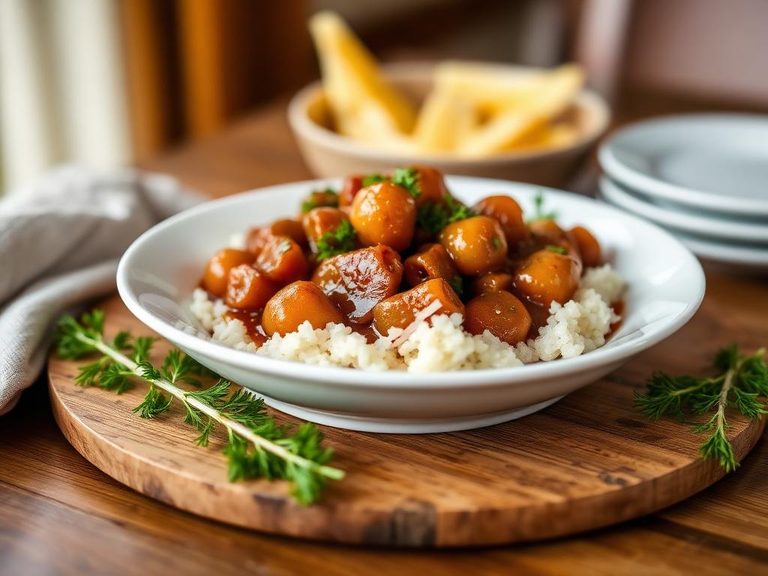
Kishka (also known as kishke or stuffed derma) is a traditional Ashkenazi Jewish dish made by filling a casing—historically a beef or chicken intestine, now often a collagen or vegetable-based casing—with a hearty mixture of ground meat, onions, spices, and a starchy binder like matzo meal, bread crumbs, or buckwheat groats. It is a staple of Eastern European Jewish cuisine, particularly popular among Polish, Ukrainian, and Lithuanian Jewish communities, and is often served as part of a holiday or Sabbath meal.
🍳 View the full Kishka recipe →
🍽️ Nutrition at a glance
Kishka is a high-protein, high-fat dish due to its ground meat and fat content, with a moderate amount of carbohydrates from the starchy binder. A typical 3-ounce serving provides roughly 250–350 calories, along with iron, B vitamins, and some fiber if whole grains or vegetables are included in the filling.
Nutrition breakdown
| Calories | 450 kcal |
| Protein | 18 g |
| Carbs | 35 g |
| Fat | 28 g |
| Fiber | 3 g |
| Sugar | 4 g |
| Sodium | 950 mg |
| Iron | 4.5 mg |
| Vitamin B12 | 2.0 mcg |
| Zinc | 5.0 mg |
| Niacin (B3) | 6.0 mg |
| Selenium | 30 mcg |
| Phosphorus | 250 mg |
| Potassium | 350 mg |
| Folate | 80 mcg |
Per 1 cup (240 g) · estimated, varies by recipe
💡 What's interesting
Kishka is culturally significant as a symbol of Ashkenazi Jewish culinary heritage, often featured in festive meals like Rosh Hashanah or Shabbat, and its preparation varies widely by family tradition. Nutritionally, it's a dense, energy-dense food designed to provide sustenance during long periods of fasting or in colder climates, reflecting the practical needs of Eastern European Jewish life.
AI estimate may be inaccurate · Terms