

Käsekuchen
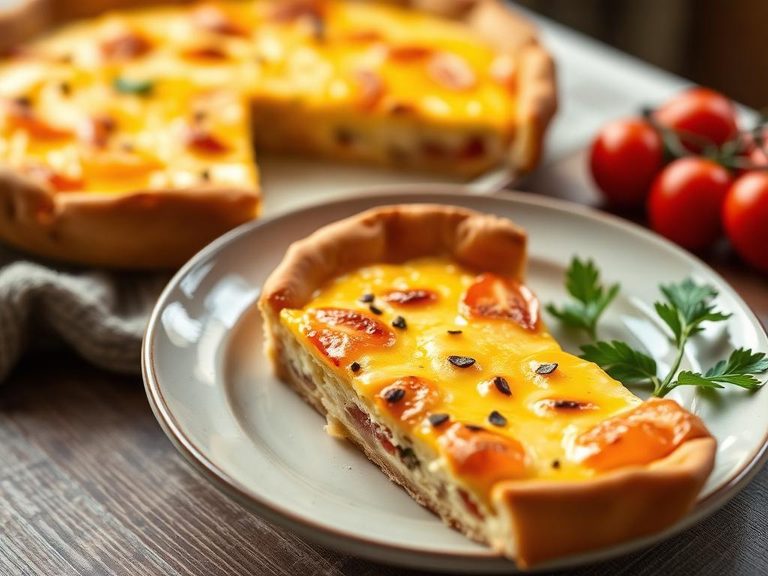
Käsekuchen is a rich German cheesecake, traditionally made with a base of shortcrust pastry (Mürbeteig) and a creamy filling of quark, a fresh dairy product similar to yogurt or ricotta. It's a beloved dessert across Germany and Austria, often flavored with lemon zest, vanilla, or a hint of rum, and sometimes topped with fruit or a crumble.
🍽️ Nutrition at a glance
This pastry variant is typically high in carbohydrates from the crust and sugar, and significant in fat from the quark and butter, with a moderate amount of protein from the dairy. A standard slice (around 100-120g) generally contains between 300-400 calories.
Nutrition breakdown
| Calories | 380 kcal |
| Protein | 8 g |
| Carbs | 32 g |
| Fat | 24 g |
| Fiber | 1 g |
| Sugar | 18 g |
| Sodium | 280 mg |
| Calcium | 150 mg |
| Phosphorus | 120 mg |
| Vitamin A | 200 mcg RAE |
| Vitamin B12 | 0.4 mcg |
| Riboflavin (B2) | 0.15 mg |
| Selenium | 10 mcg |
| Zinc | 1.2 mg |
| Iron | 1.5 mg |
Per 1 slice (120 g) · estimated, varies by recipe
💡 What's interesting
What makes Käsekuchen unique is its use of quark instead of cream cheese, giving it a lighter, tangier, and less dense texture than American-style cheesecake. Culturally, it's a staple of German 'Kaffee und Kuchen' (coffee and cake) afternoon tradition, representing a moment of daily leisure and social connection.
AI estimate may be inaccurate · Terms