Involtini
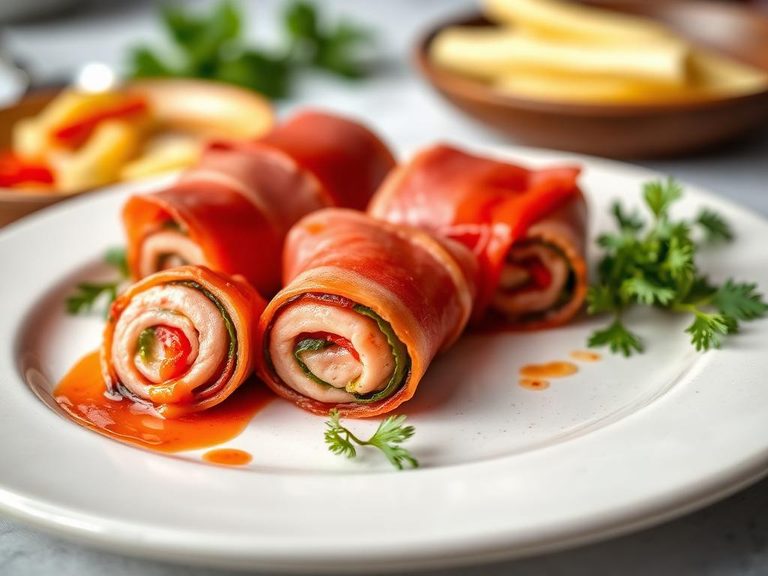
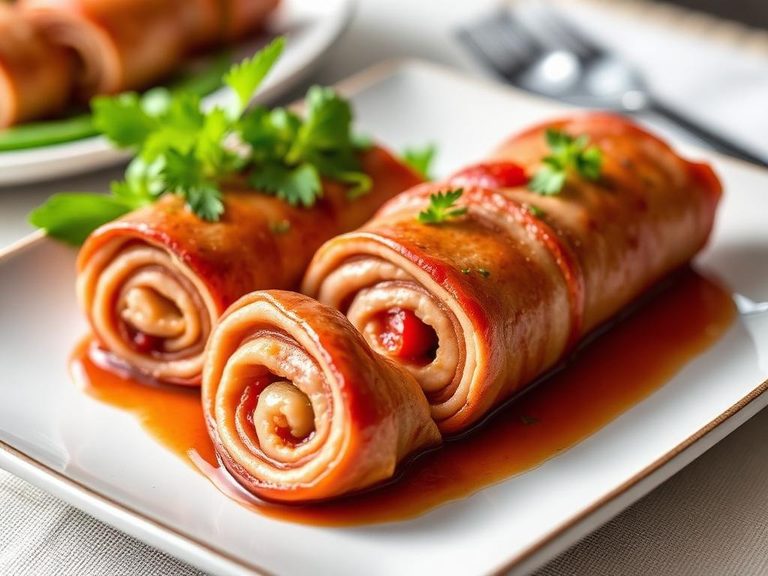
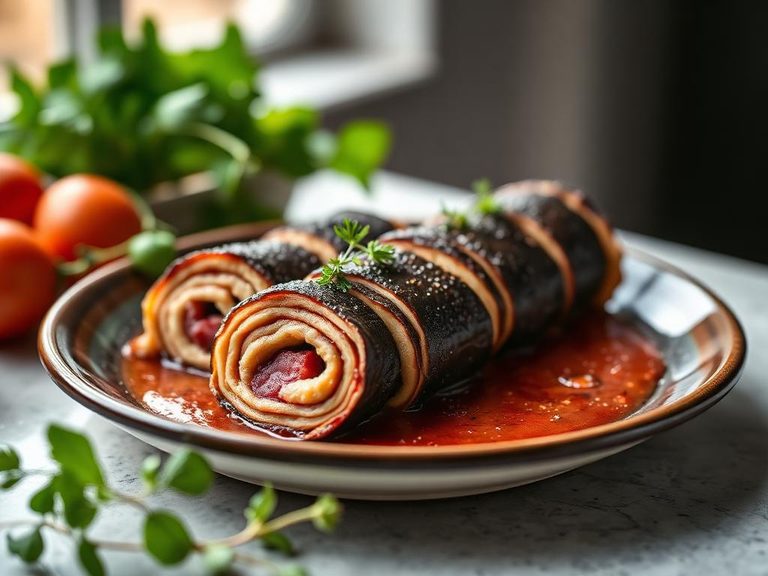
Involtini are delicate Italian rolls, typically made by wrapping thin slices of meat (like veal or chicken) or vegetables (like eggplant) around a savory filling of cheese, herbs, and breadcrumbs, then secured with prosciutto or kitchen twine and cooked. They are a beloved staple across Italy, with regional variations in the choice of wrapper and stuffing, often served as a main course or elegant appetizer. The dish showcases the Italian talent for transforming simple ingredients into a refined and flavorful presentation.
🍽️ Nutrition at a glance
Depending on the main ingredient, involtini can be a good source of protein from the meat and cheese, with a moderate amount of fat, especially if using prosciutto and full-fat cheeses. A typical serving (2-3 rolls) likely ranges from 300 to 500 calories, providing iron, B vitamins, and calcium, while being relatively low in carbohydrates unless breadcrumbs are a major component of the filling.
Nutrition breakdown
| Calories | 420 kcal |
| Protein | 32 g |
| Carbs | 8 g |
| Fat | 28 g |
| Fiber | 1 g |
| Sugar | 3 g |
| Sodium | 980 mg |
| Iron | 3.2 mg |
| Zinc | 4.8 mg |
| Vitamin B12 | 2.1 mcg |
| Niacin (B3) | 8.5 mg |
| Phosphorus | 290 mg |
| Selenium | 38 mcg |
| Potassium | 420 mg |
| Vitamin B6 | 0.6 mg |
Per 3 pieces (180 g) · estimated, varies by recipe
💡 What's interesting
Culturally, involtini represent the Italian principle of 'cucina povera' (peasant cooking), where economical ingredients are elevated through skillful preparation and presentation. Nutritionally, they offer a balanced way to combine protein and vegetables in a single, portion-controlled package, making them adaptable to both hearty and lighter dietary preferences.