

Hodogaya
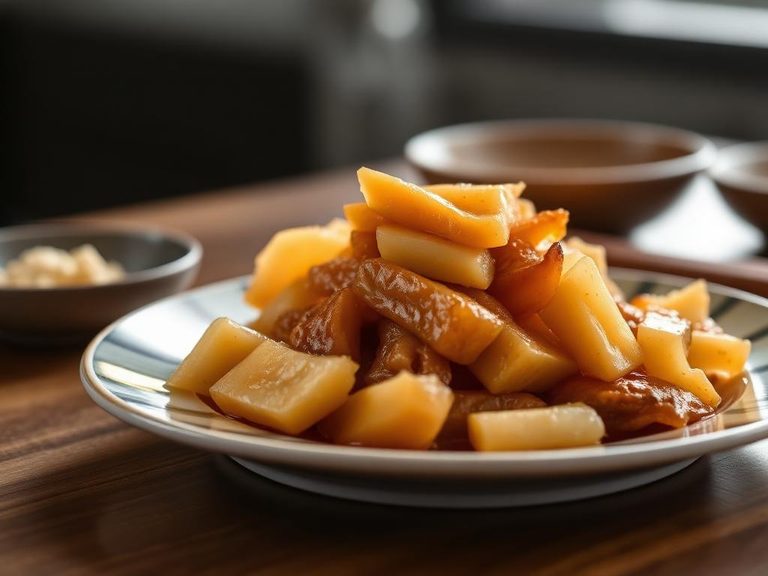
Hodogaya is a traditional Japanese simmered dish made from young, unripe jackfruit, which is prized for its meat-like texture. It is typically cooked in a savory-sweet broth of soy sauce, mirin, sugar, and dashi, often with added ingredients like konnyaku (konjac) or carrots for extra texture and flavor. This dish is a staple in Japanese home cooking, particularly during the Edo period, and is often served as part of a balanced meal or in bento boxes.
🍽️ Nutrition at a glance
Hodogaya is relatively low in calories, with a typical serving containing around 100-150 calories, and is primarily a source of carbohydrates from the jackfruit and sweeteners. It provides dietary fiber, vitamins like vitamin C and B vitamins, and minerals such as potassium and magnesium, while being low in fat and protein unless combined with other ingredients like tofu or meat.
Nutrition breakdown
| Calories | 110 kcal |
| Protein | 1.5 g |
| Carbs | 22 g |
| Fat | 2.5 g |
| Fiber | 5 g |
| Sugar | 8 g |
| Sodium | 680 mg |
| Potassium | 450 mg |
| Vitamin C | 15 mg |
| Vitamin B6 | 0.2 mg |
| Folate | 40 mcg |
| Manganese | 0.5 mg |
| Magnesium | 40 mg |
| Iron | 1.2 mg |
| Calcium | 50 mg |
Per 1 cup (240 g) · estimated, varies by recipe
💡 What's interesting
Culturally, hodogaya is an example of *shōjin ryōri* (Buddhist vegetarian cuisine), where young jackfruit is used as a plant-based substitute for meat, reflecting Japan's historical adaptation of ingredients. Nutritionally, its high fiber content and low calorie density make it a satisfying, gut-friendly dish that supports digestive health.
AI estimate may be inaccurate · Terms