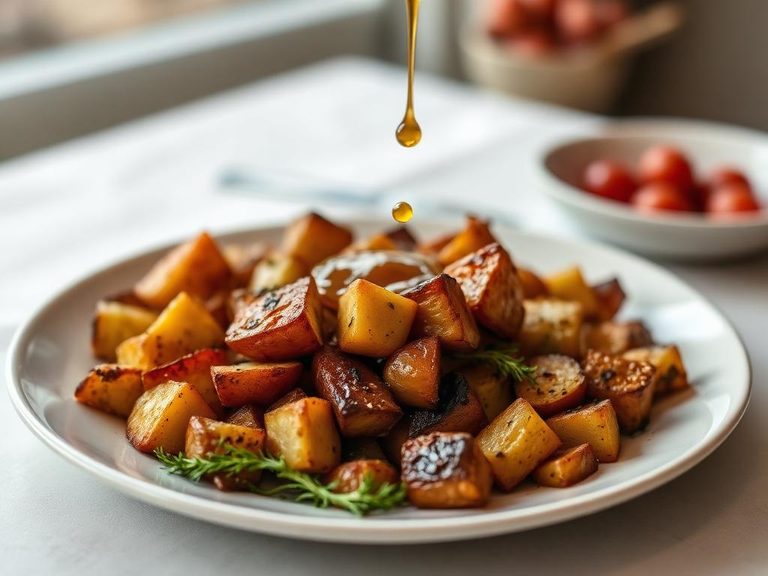
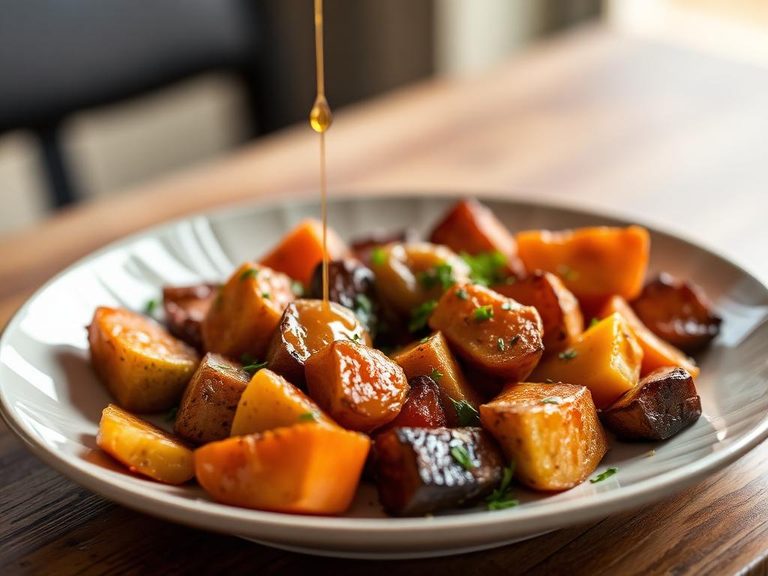
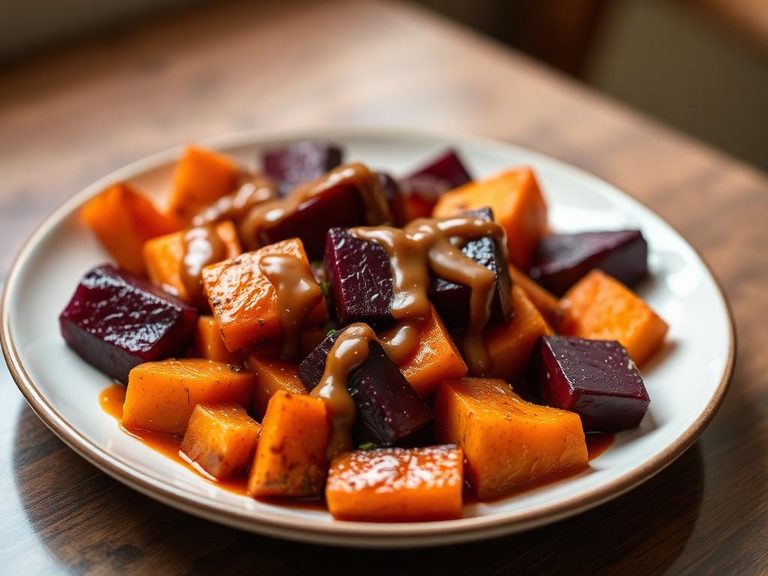
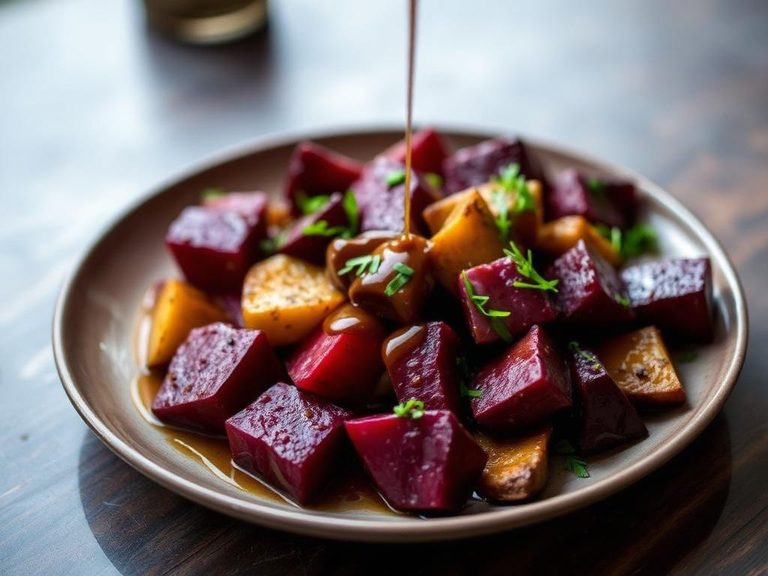
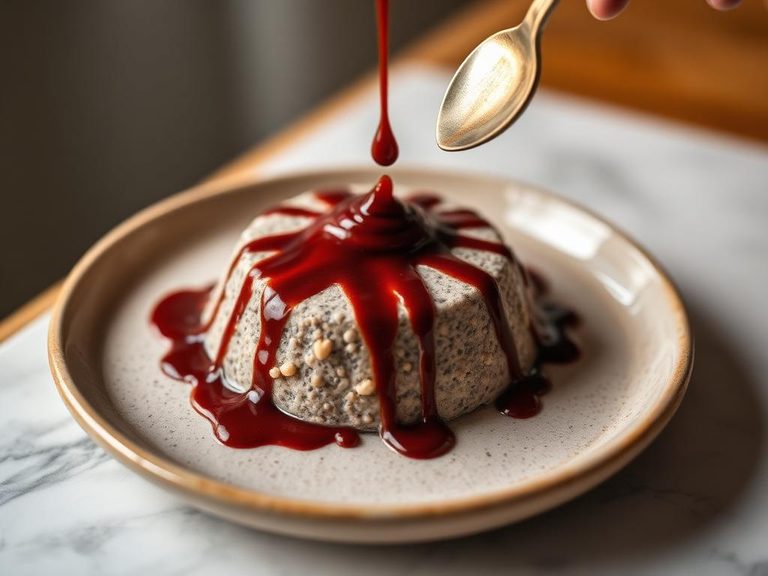
Drizzled over roasted vegetables or soups
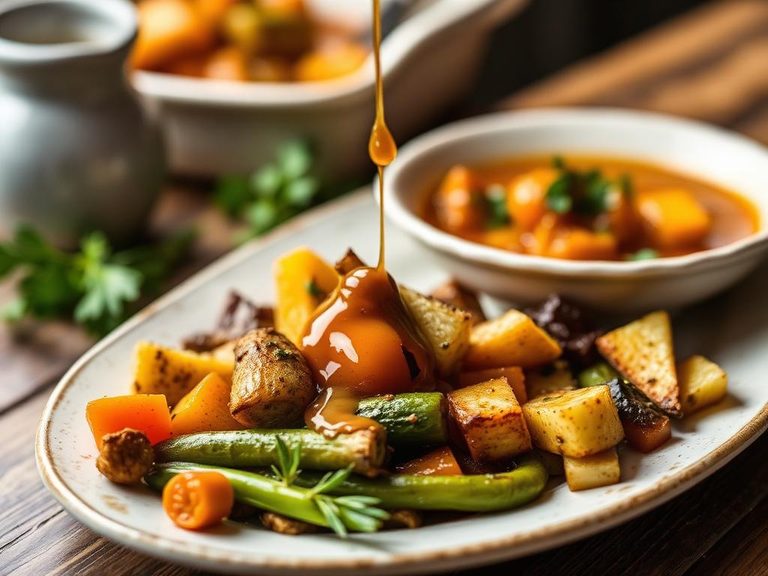
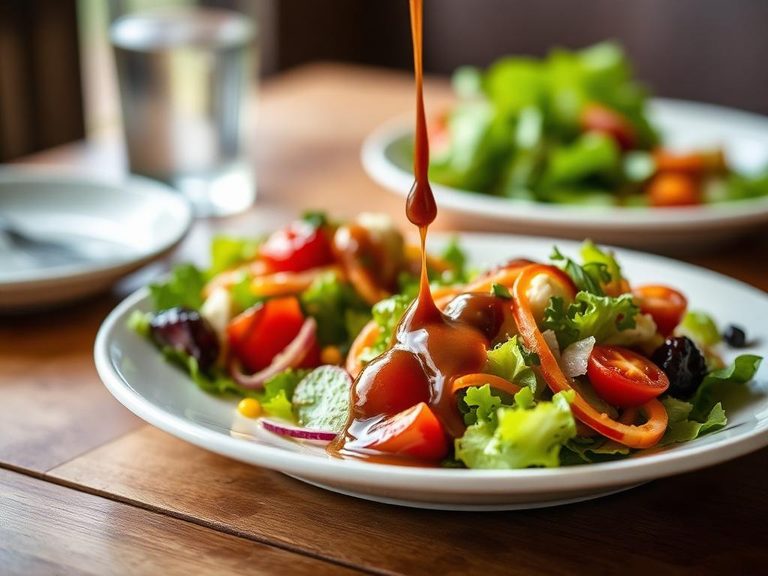
This is a versatile condiment, often a sauce, dressing, or infused oil, designed to enhance the flavor of roasted vegetables or soups. Common examples include balsamic glaze, herb-infused olive oil, or tahini drizzle, with ingredients varying from vinegar and herbs to nuts and spices. While the concept is global, specific versions like Italian balsamic glaze or Middle Eastern tahini sauce have distinct regional origins.
🍽️ Nutrition at a glance
The nutritional profile varies widely; it can be high in healthy fats (like olive oil) or carbohydrates (like a sweet glaze). Key nutrients depend on the base, offering things like monounsaturated fats, antioxidants from herbs, or minerals like calcium from tahini. A typical serving can range from 20 to 150 calories.
Nutrition breakdown
| Calories | 80 kcal |
| Protein | 0.5 g |
| Carbs | 3 g |
| Fat | 7 g |
| Fiber | 0 g |
| Sugar | 2 g |
| Sodium | 150 mg |
| Vitamin E | 1.2 mg |
| Vitamin K | 8 µg |
| Iron | 0.3 mg |
| Magnesium | 5 mg |
| Potassium | 45 mg |
| Manganese | 0.1 mg |
Per 2 tablespoons (30 g) · estimated, varies by recipe
💡 What's interesting
Culturally, these drizzles are a simple yet transformative culinary technique used across many cuisines to add a finishing touch of flavor, acidity, or richness. Nutritionally, they can be a vehicle for healthy fats or concentrated plant-based nutrients, making them a functional addition to a meal.