Dashi
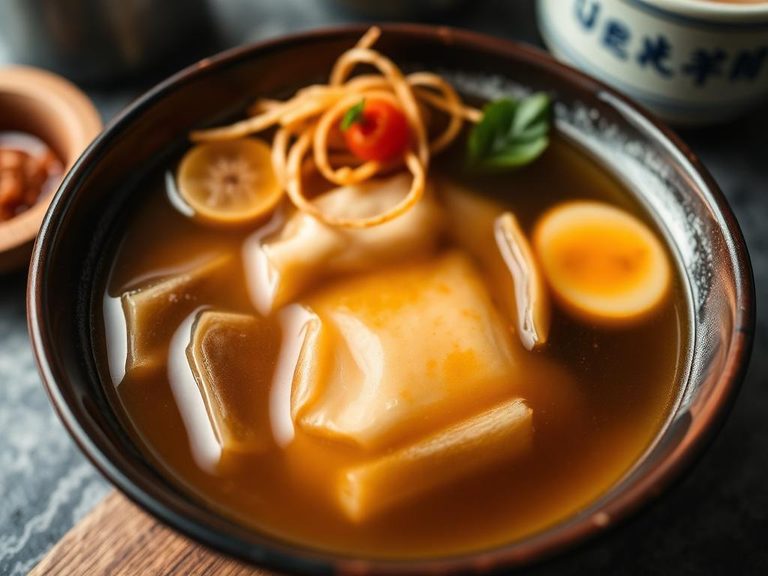
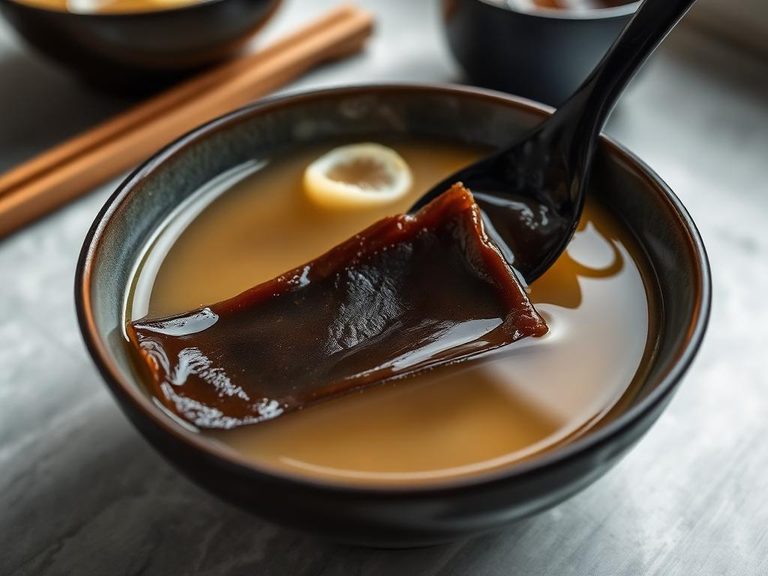
Dashi is the foundational soup stock of Japanese cuisine, providing the essential umami flavor base for miso soup, noodle broths, and simmered dishes. It is typically made by simmering or steeping kombu (kelp) and katsuobushi (dried, fermented, and smoked bonito flakes) in water. This simple yet profound broth is a cornerstone of Japanese home cooking and professional kitchens.
🍽️ Nutrition at a glance
Dashi is an extremely low-calorie, virtually fat-free, and carbohydrate-free liquid. Its primary nutritional contribution is minerals from the seaweed, such as iodine, and small amounts of protein and B vitamins from the fish flakes. A standard serving contains roughly 5-10 calories.
Nutrition breakdown
| Calories | 10 kcal |
| Protein | 1.5 g |
| Carbs | 0.5 g |
| Fat | 0.1 g |
| Fiber | 0 g |
| Sugar | 0.2 g |
| Sodium | 450 mg |
| Potassium | 150 mg |
| Magnesium | 25 mg |
| Phosphorus | 20 mg |
| Calcium | 15 mg |
| Iron | 0.5 mg |
| Zinc | 0.3 mg |
| Selenium | 2 mcg |
| Niacin (B3) | 0.2 mg |
Per 1 cup (240 g) · estimated, varies by recipe
💡 What's interesting
Dashi is celebrated for its ability to deliver a deep, savory 'umami' taste—the fifth basic taste—without heavy fats or strong flavors, showcasing the Japanese principle of enhancing natural ingredients. Nutritionally, it provides essential minerals like iodine from the ocean in a highly digestible form.