Buddha Bowl Base
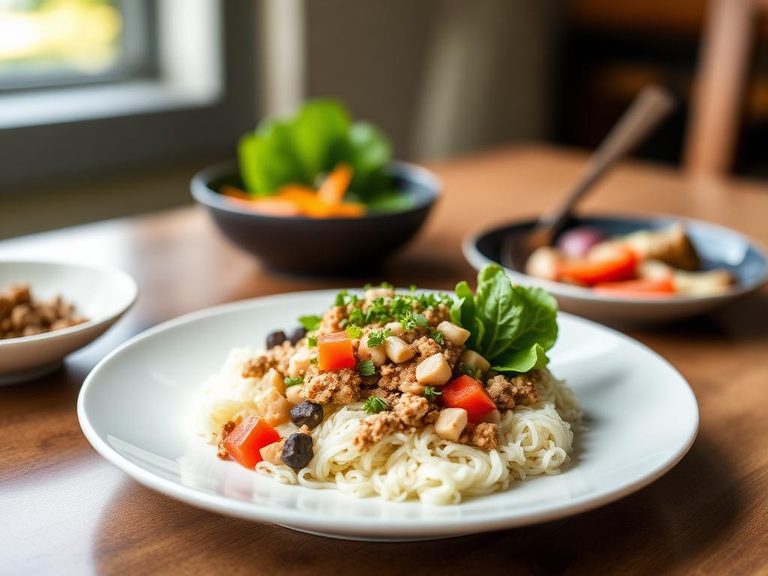
A Buddha Bowl Base is a customizable, plant-forward meal foundation, typically consisting of a whole grain like quinoa or brown rice, a variety of roasted or raw vegetables, and a protein source such as chickpeas or tofu. While it has no single origin, the concept is a modern, health-focused evolution of balanced meals from various cuisines, popularized in wellness communities. It's named for its resemblance to the rounded belly of a Buddha statue when served in a deep bowl.
🍽️ Nutrition at a glance
This dish is nutritionally balanced, offering complex carbohydrates from the grains, plant-based protein, and healthy fats often from a tahini or avocado-based dressing. It is typically high in fiber, vitamins, and minerals, with a rough calorie range of 400-600 per serving depending on the specific ingredients and portion sizes.
Nutrition breakdown
| Calories | 380 kcal |
| Protein | 12 g |
| Carbs | 52 g |
| Fat | 14 g |
| Fiber | 10 g |
| Sugar | 8 g |
| Sodium | 320 mg |
| Vitamin A | 450 mcg RAE |
| Vitamin C | 45 mg |
| Vitamin K | 90 mcg |
| Folate | 150 mcg DFE |
| Potassium | 680 mg |
| Magnesium | 85 mg |
| Iron | 4.5 mg |
| Calcium | 120 mg |
Per 1 bowl (400 g) · estimated, varies by recipe
💡 What's interesting
Culturally, the Buddha Bowl represents a modern, globalized approach to eating, blending ingredients and concepts from multiple traditions into a single, convenient meal. Nutritionally, its unique appeal lies in the 'synergy of the bowl'—the combination of diverse, colorful ingredients provides a wide spectrum of phytonutrients that work together to support overall health.