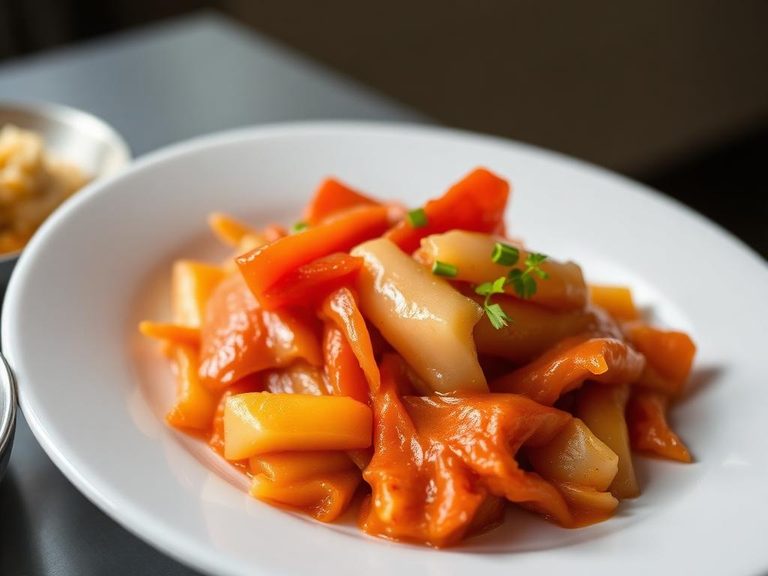
Banchan

Banchan refers to a variety of small, shared side dishes in Korean cuisine, and pickled carrots (often called 'danmuji' or simply 'pickled carrot banchan') are a common, crunchy example. They are typically made from julienned or sliced carrots pickled in a sweet and tangy brine of vinegar, sugar, and salt, sometimes with added garlic or ginger. This dish is a staple in Korean meals, providing a refreshing and palate-cleansing contrast to richer main courses.
🍽️ Nutrition at a glance
This banchan is low in fat and protein, with most of its calories coming from carbohydrates, primarily from the added sugar in the pickling brine. A typical small serving (about 1/4 cup) provides around 20-40 calories, along with a good amount of vitamin A from the carrots and some probiotics if naturally fermented.
Nutrition breakdown
| Calories | 45 kcal |
| Protein | 1.2 g |
| Carbs | 10 g |
| Fat | 0.2 g |
| Fiber | 3.5 g |
| Sugar | 5 g |
| Sodium | 350 mg |
| Vitamin A | 12000 IU |
| Vitamin K | 15 mcg |
| Vitamin C | 8 mg |
| Potassium | 320 mg |
| Sodium | 350 mg |
| Manganese | 0.3 mg |
| Vitamin B6 | 0.15 mg |
| Folate | 25 mcg |
Per 1 cup (150 g) · estimated, varies by recipe
💡 What's interesting
Culturally, banchan embodies the Korean principle of 'jeong' (harmony and balance) by offering a multitude of flavors and textures to complement a meal. Nutritionally, the pickling process not only preserves the carrots but can also enhance the bioavailability of certain nutrients and introduce beneficial bacteria for gut health.