

Arctic ice cream
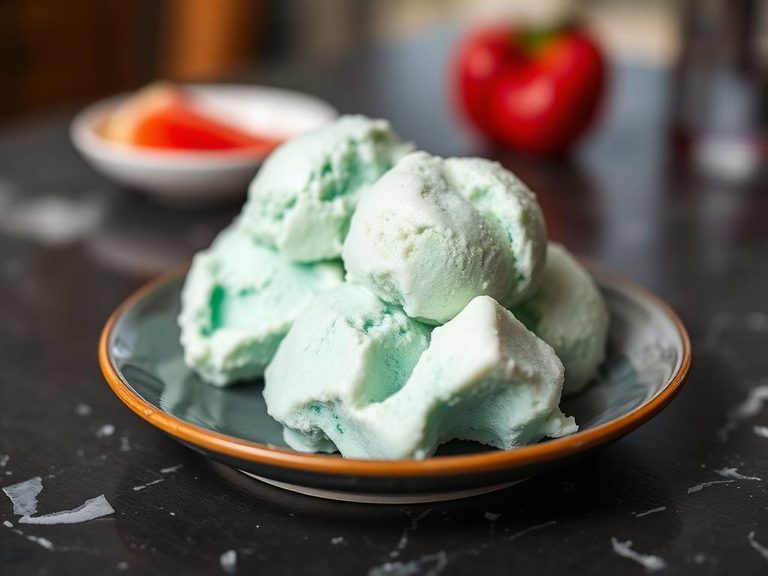
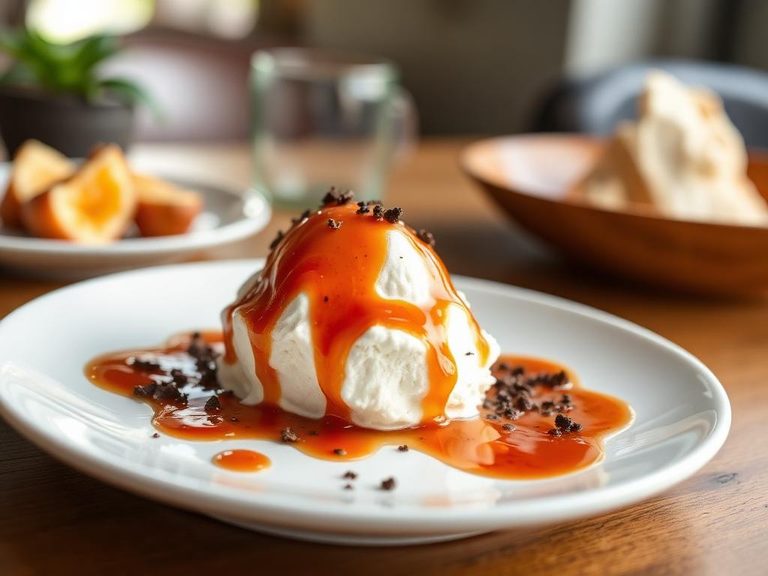
Arctic ice cream is a traditional Inuit and Yupik dessert made from rendered animal fat, berries, and sometimes fish eggs, whipped into a light, airy texture. It is a staple in Arctic regions like Alaska, Northern Canada, and Greenland, where it serves as a calorie-dense survival food. Unlike Western ice cream, it contains no dairy and is often eaten frozen or semi-frozen.
🍽️ Nutrition at a glance
This dish is extremely high in fat and calories, providing essential energy in cold climates, with minimal carbohydrates or protein. A single serving can offer a significant amount of vitamin C from berries and omega-3 fatty acids from marine sources, with a calorie count often exceeding 500 kcal.
Nutrition breakdown
| Calories | 550 kcal |
| Protein | 2.5 g |
| Carbs | 8 g |
| Fat | 58 g |
| Fiber | 1.5 g |
| Sugar | 5 g |
| Sodium | 15 mg |
| Vitamin C | 15 mg |
| Vitamin E | 3.2 mg |
| Omega-3 (EPA+DHA) | 800 mg |
| Potassium | 120 mg |
| Iron | 1.8 mg |
| Vitamin A | 45 mcg |
| Calcium | 20 mg |
| Phosphorus | 90 mg |
Per 1/2 cup (120 g) · estimated, varies by recipe
💡 What's interesting
Culturally, it is a symbol of communal feasting and resourcefulness, traditionally prepared during celebrations and made from ingredients like seal oil or caribou fat. Nutritionally, it is unique as a non-dairy, high-fat food that historically helped prevent scurvy due to its vitamin C content from wild berries.
🍽️ Related dishes



AI estimate may be inaccurate · Terms