

Rabanadas
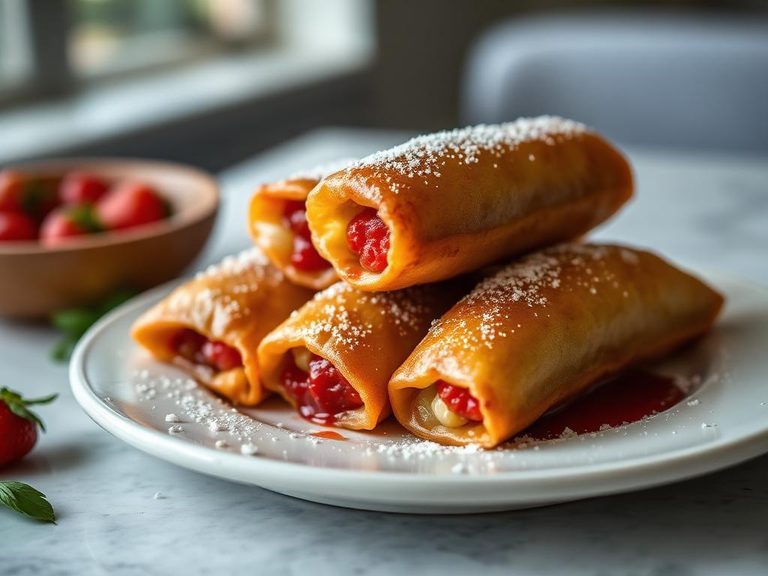
Rabanadas are a traditional Portuguese dessert, similar to French toast, typically enjoyed during Christmas and New Year's celebrations. They are made by slicing day-old bread, soaking it in a mixture of milk, eggs, and sometimes cinnamon or lemon zest, then frying it until golden and coating it in sugar and cinnamon.
🍳 View the full Rabanadas recipe →
🍽️ Nutrition at a glance
Rabanadas are high in carbohydrates and fats due to the bread, sugar, and frying process, providing a quick energy boost. A single serving (about one rabanada) can contain roughly 200-300 calories, with minimal protein but some calcium from the milk and eggs.
Nutrition breakdown
| Calories | 420 kcal |
| Protein | 8 g |
| Carbs | 52 g |
| Fat | 20 g |
| Fiber | 2 g |
| Sugar | 28 g |
| Sodium | 350 mg |
| Calcium | 120 mg |
| Iron | 2.5 mg |
| Potassium | 180 mg |
| Vitamin A | 150 mcg RAE |
| Vitamin D | 1.2 mcg |
| Vitamin B12 | 0.4 mcg |
| Phosphorus | 150 mg |
| Magnesium | 25 mg |
Per 2 pieces (approx. 150 g) · estimated, varies by recipe
💡 What's interesting
Culturally, rabanadas are a festive staple in Portugal and Brazil, often served at family gatherings during the holiday season, symbolizing warmth and celebration. Nutritionally, they offer a comforting, indulgent treat that highlights the use of simple, pantry-staple ingredients transformed into a festive dish.
AI estimate may be inaccurate · Terms