Pork rinds base
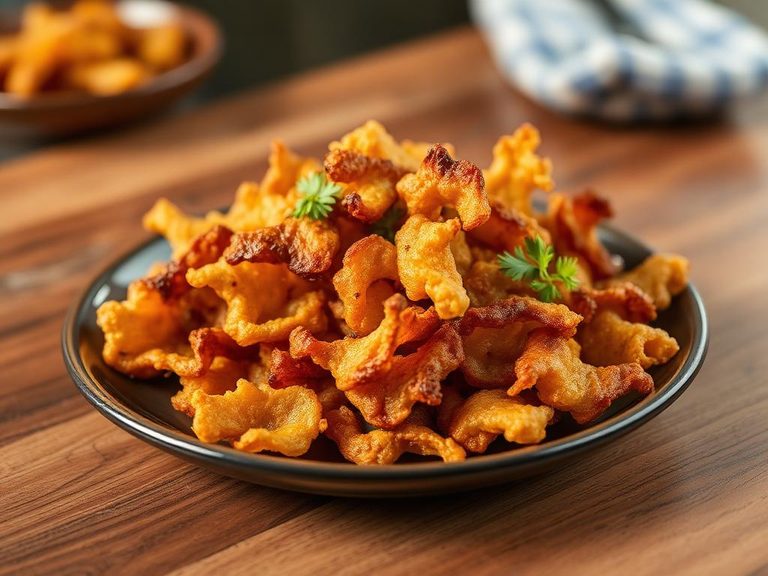
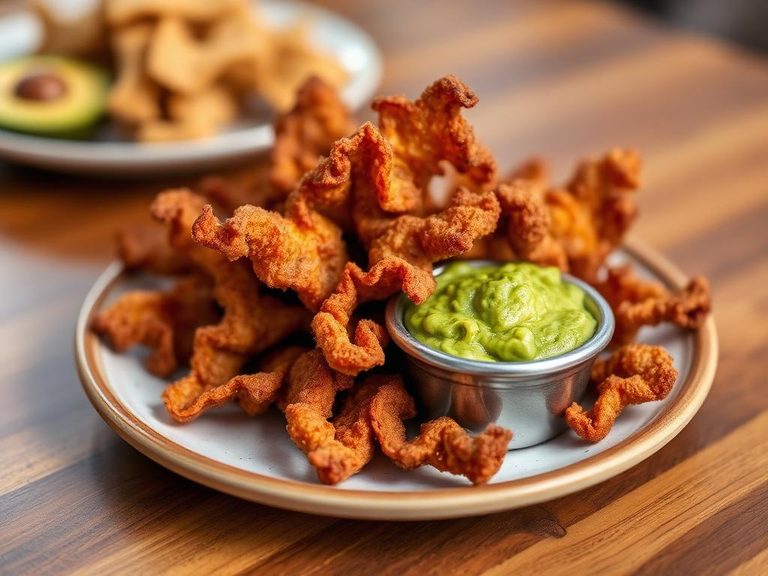
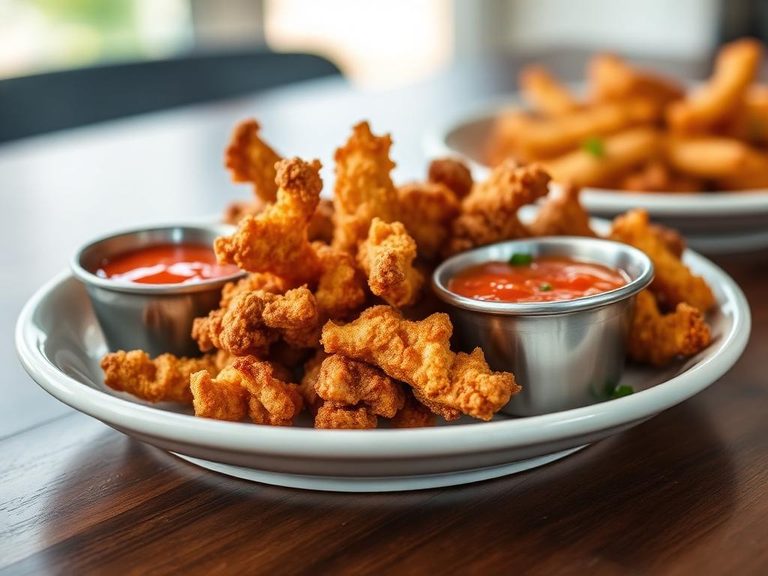
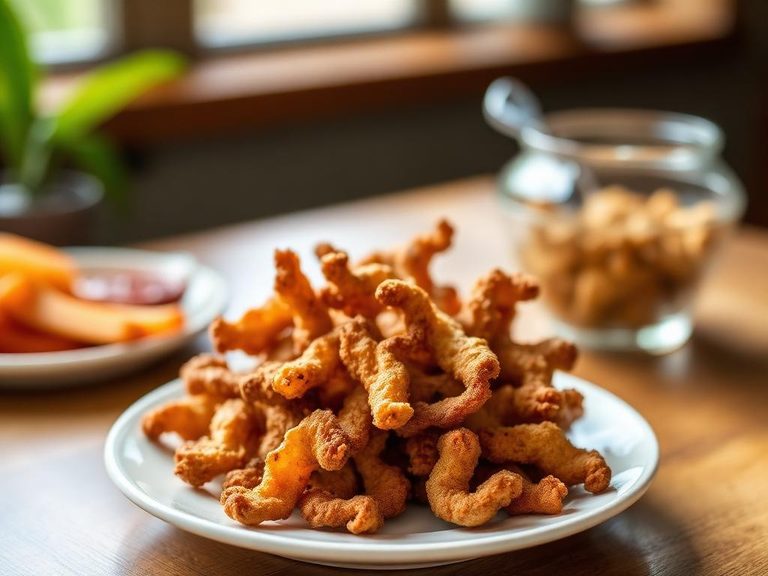
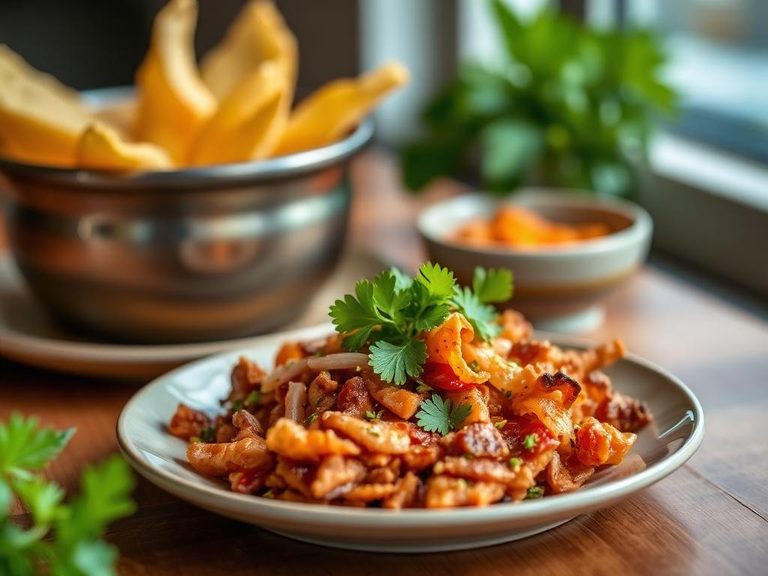
Pork rinds base, often referred to as 'chicharrón' in Spanish-speaking cultures or simply 'pork rinds' in English, is a dish made from deep-fried pork skin. The skin is typically boiled, dried, and then fried until it puffs up into a light, airy, and crunchy texture. It is a popular snack and ingredient in many cuisines, including Latin American, Asian, and Southern United States cooking.
🍽️ Nutrition at a glance
Pork rinds are very high in fat and protein, with virtually zero carbohydrates, making them a staple in low-carb and ketogenic diets. A typical serving provides a significant amount of protein and fat, with a calorie count that can range from 150 to 200 kcal per 28g (1 ounce) serving.
Nutrition breakdown
| Calories | 160 kcal |
| Protein | 9 g |
| Carbs | 0 g |
| Fat | 14 g |
| Fiber | 0 g |
| Sugar | 0 g |
| Sodium | 370 mg |
| Protein | 9 g |
| Fat | 14 g |
| Sodium | 370 mg |
| Potassium | 30 mg |
| Iron | 0.5 mg |
| Vitamin B1 (Thiamine) | 0.1 mg |
| Vitamin B12 | 0.1 mcg |
| Phosphorus | 50 mg |
Per 1 ounce (28 g) · estimated, varies by recipe
💡 What's interesting
Culturally, pork rinds are a versatile food enjoyed worldwide under different names, from 'chicharrón' in Mexico to 'lechon kawali' in the Philippines. Nutritionally, they are unique for being a high-protein, zero-carb snack, but they are also high in saturated fat and sodium, which requires mindful consumption.