

Muskrat Sausage
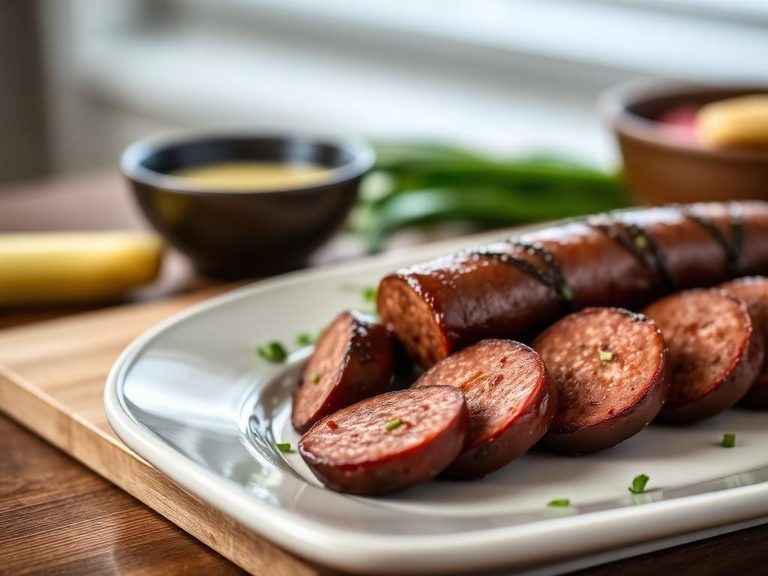
Muskrat sausage is a traditional, rustic sausage made from the meat of the muskrat, a semi-aquatic rodent. The meat is typically ground and seasoned with spices like sage, thyme, and black pepper, then encased and smoked or dried. It is a regional specialty, particularly associated with rural areas of the American Midwest and parts of Canada, where muskrat hunting has been a historical practice.
🍽️ Nutrition at a glance
Muskrat sausage is a high-protein, high-fat food with very few carbohydrates. It is a rich source of iron and B vitamins, particularly B12, and a typical serving can provide around 300-400 calories.
Nutrition breakdown
| Calories | 320 kcal |
| Protein | 28 g |
| Carbs | 1 g |
| Fat | 22 g |
| Fiber | 0 g |
| Sugar | 0 g |
| Sodium | 680 mg |
| Iron | 4.2 mg |
| Vitamin B12 | 6.5 mcg |
| Zinc | 5.8 mg |
| Phosphorus | 280 mg |
| Niacin (B3) | 7.5 mg |
| Selenium | 32 mcg |
| Potassium | 350 mg |
| Vitamin B6 | 0.5 mg |
Per 2 links (113 g) · estimated, varies by recipe
💡 What's interesting
Culturally, muskrat sausage represents a form of foraging and utilizing local game, often tied to subsistence or traditional hunting practices. Nutritionally, it is a very lean and nutrient-dense protein source compared to many conventional sausages.
🍽️ Related dishes
AI estimate may be inaccurate · Terms