

Lewerkoeken
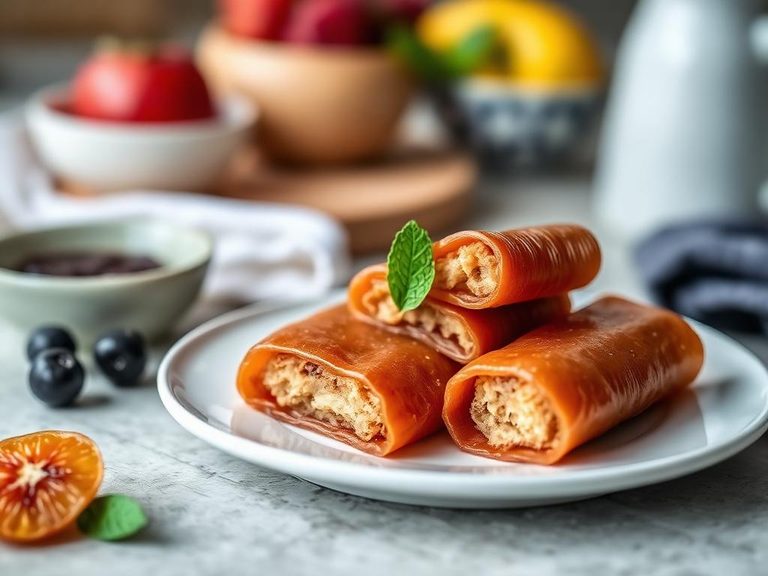
Lewerkoeken are traditional Dutch fruit leathers, typically made by slow-baking a smooth puree of apples, pears, or other fruits with sugar and spices until it becomes a chewy, concentrated sheet. Originating from the Netherlands, this treat is a beloved way to preserve seasonal fruit harvests for the colder months.
🍽️ Nutrition at a glance
As a fruit-based confection, lewerkoeken are high in natural and added carbohydrates (sugars) and provide a quick source of energy. A typical serving offers small amounts of dietary fiber and vitamins like vitamin C from the fruit, with a calorie count ranging roughly from 80 to 120 calories per piece.
Nutrition breakdown
| Calories | 150 kcal |
| Protein | 0.5 g |
| Carbs | 35 g |
| Fat | 0.5 g |
| Fiber | 2 g |
| Sugar | 30 g |
| Sodium | 10 mg |
| Potassium | 200 mg |
| Vitamin C | 15 mg |
| Iron | 0.5 mg |
| Magnesium | 15 mg |
| Calcium | 20 mg |
| Phosphorus | 30 mg |
| Vitamin A | 100 IU |
| Niacin (B3) | 0.3 mg |
Per 1 piece (50 g) · estimated, varies by recipe
💡 What's interesting
Culturally, making lewerkoeken is a cherished autumn tradition in Dutch households, often done as a family activity to prepare for winter. Nutritionally, it's an interesting example of a historical preservation method that concentrates fruit's nutrients and flavor without added fats or proteins.
AI estimate may be inaccurate · Terms