Lamb Tallow Soap
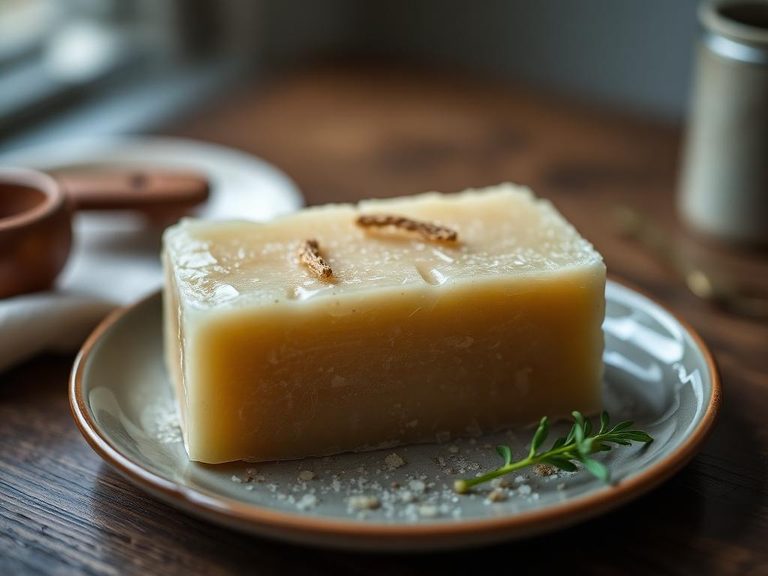
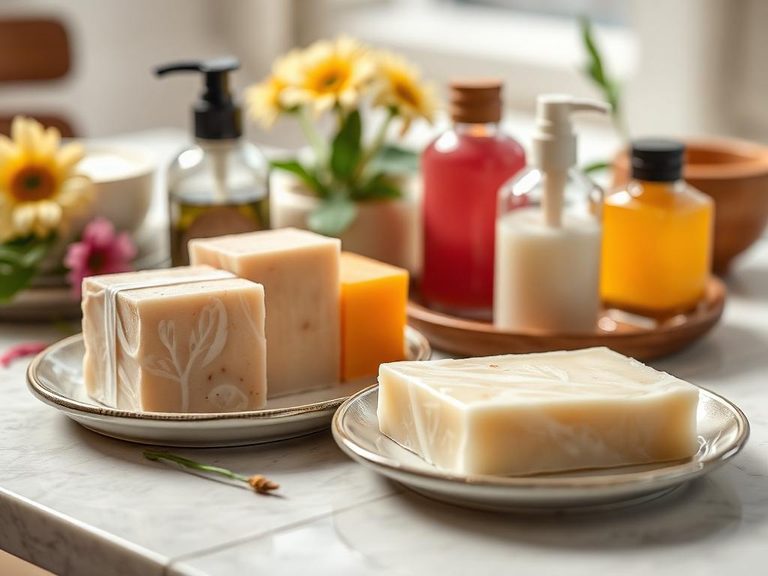
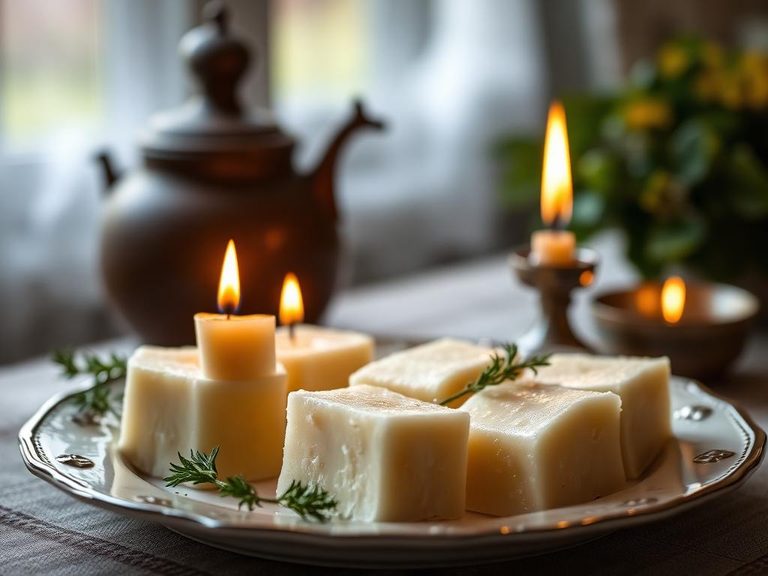
Lamb Tallow Soap is not a dish but a traditional, handmade soap made from rendered lamb fat (tallow), water, and lye (sodium hydroxide). It is a staple in many cultures with pastoral traditions, particularly in the Middle East, Central Asia, and parts of Europe, where it was historically a primary cleanser for skin and wool.
🍽️ Nutrition at a glance
As a soap, it is not a food and is not meant to be eaten. It contains no carbohydrates, protein, or dietary fiber. Its primary component is saponified fats, which are cleansing agents, not nutrients.
Nutrition breakdown
| Calories | 0 kcal |
| Protein | 0 g |
| Carbs | 0 g |
| Fat | 0 g |
| Fiber | 0 g |
| Sugar | 0 g |
| Sodium | 0 mg |
| Sodium (from lye) | Not a dietary nutrient |
| Fatty Acids (saponified) | Primary cleansing component |
Per 1 bar (100 g) · estimated, varies by recipe
💡 What's interesting
Culturally, lamb tallow soap represents a deep connection to sustainable, zero-waste living, using a byproduct of animal husbandry. Its unique, slightly waxy texture and rich lather are prized in traditional cold-process soap making, and it's known for being exceptionally moisturizing for skin and effective for cleaning woolens.